
Top Signs You Need Garage Door Service – Don’t Ignore These
The signs that matter most aren’t the loud ones. In our experience, the doors that fail hardest are the ones that were “a little slow” for months. A motor working twice as hard to compensate for a tired spring is a motor burning through its remaining life quietly, and by the time it quits you’re paying for two repairs instead of one. Below we sort the real warning signs into three tiers: fix today, fix this week, and watch and schedule. Read the tier, make the call.
If you’d rather not climb a ladder and guess, call (877) 780-7403. Free estimates, and we’ll tell you plainly which tier your door is in.
Key Takeaways
- A broken spring, a cable off its drum, or a door off its track is a fix-today problem, not a scheduling problem.
- A door that’s slow, noisy, or randomly reverses is usually telling you a mechanical part is wearing, not that the opener is fine.
- Worn rollers, misaligned safety sensors, and sluggish response belong in the fix-this-week tier before they escalate.
- Weatherstripping, minor dents, and small seal gaps can be scheduled without panic.
- Any door that won’t stay balanced when you test it by hand needs professional attention, full stop.
Tier One: Signs You Need Service Today
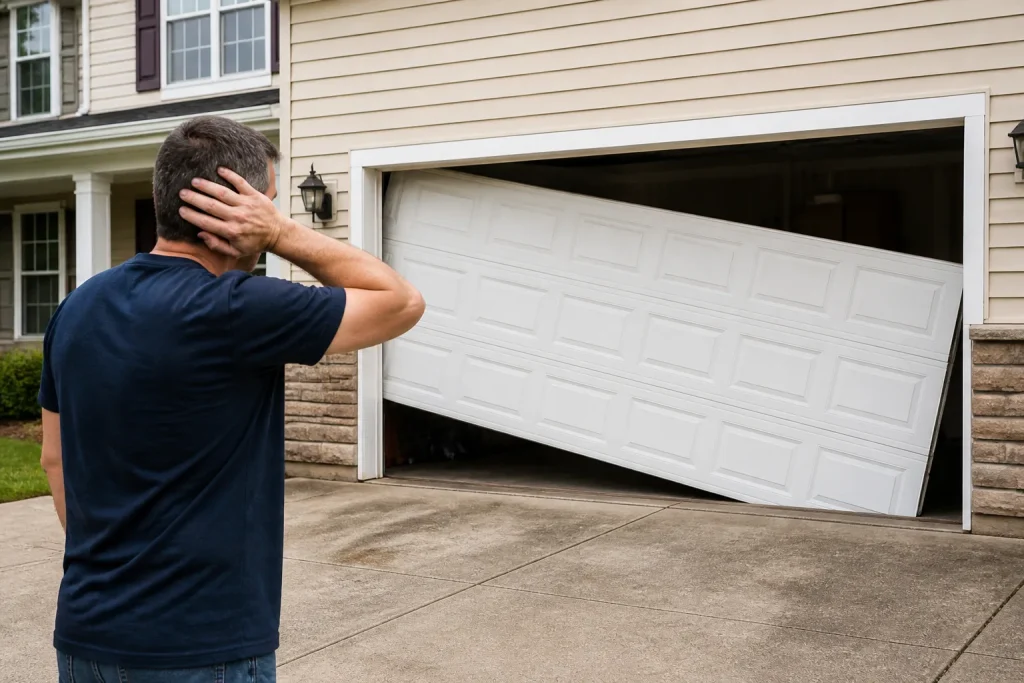
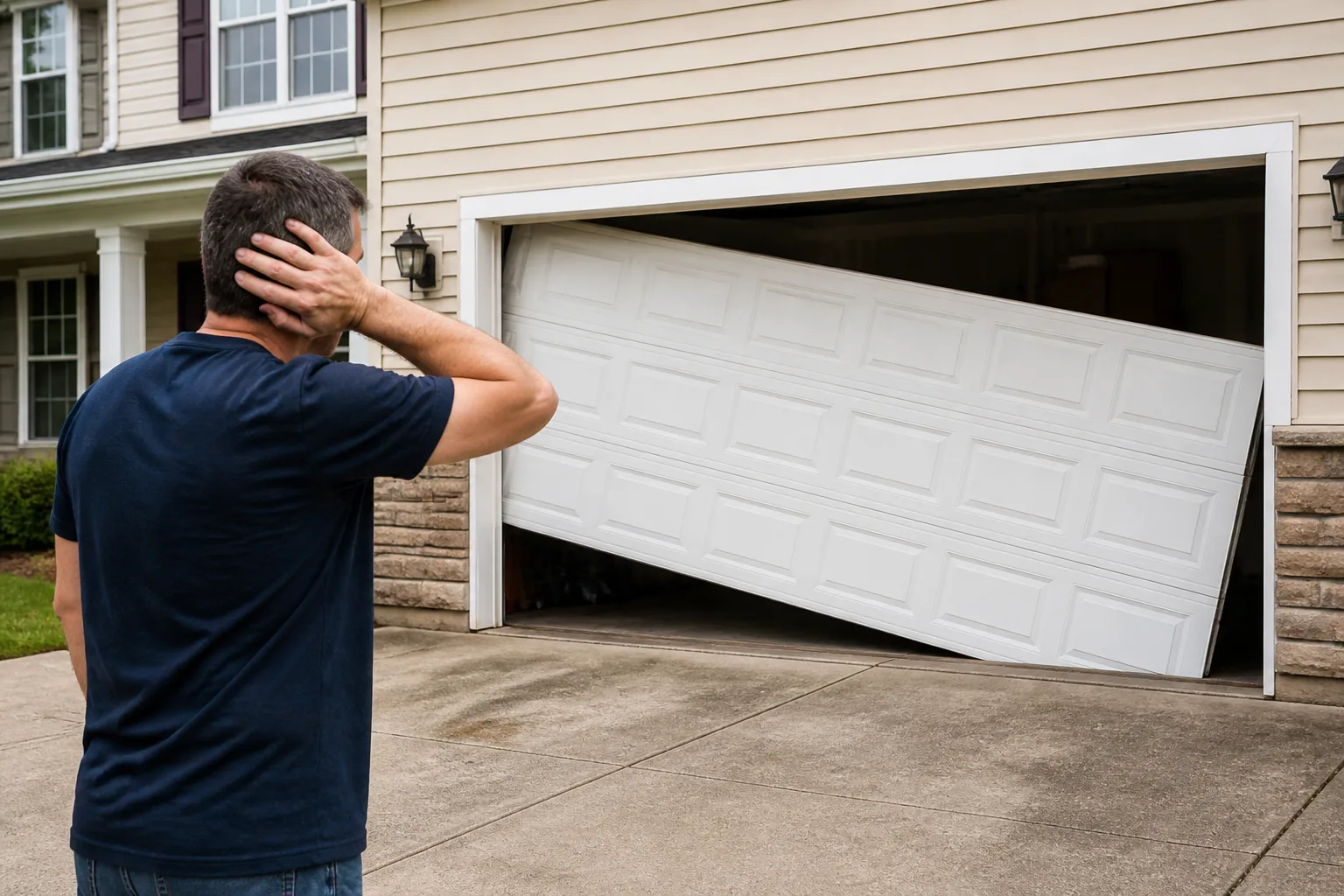
These are the calls where waiting isn’t a scheduling choice. A broken spring, a cable that’s jumped off the drum, or a door sitting crooked in the track are all conditions where the door’s weight is no longer under control. That’s a safety issue, not a nuisance. In Wilmington, we treat these the way they deserve to be treated: as urgent.
Here’s what puts you in this tier:
- A loud bang from the garage, then a door that won’t lift. That bang is almost always a torsion spring snapping. The door may not move at all, or the opener may strain and give up.
- A visibly loose, slack, or dangling cable. Cables are under extreme tension. Never touch one to “see if it’s loose.”
- A door hanging crooked, with one side higher than the other. That’s typically a cable or roller problem and the door can drop without warning.
- A door that has come out of its track entirely. Don’t try to force it back in. The panels can bend and the door can fall.
Springs and cables are the two parts of a garage door that genuinely injure people who try to handle them without training. We’d rather you call than improvise. We answer 24/7, and fast dispatch runs from 7am to 7pm.
Tier Two: Signs to Fix This Week
Nothing here is an emergency today, but each of these puts extra load on parts that weren’t designed to carry it. Left a few weeks, a worn roller becomes a bent track. A misaligned safety sensor becomes a door that closes on something. This is the tier where a modest repair keeps a bigger one from forming.
- Grinding noise while the door moves. That’s usually metal on metal: dry or worn rollers, or a torsion tube that needs attention.
- Popping or snapping during travel. Often a cable jumping its drum or a hinge working loose. It’s telling you something is shifting that shouldn’t.
- Rattling that gets worse over time. Loose hinges, brackets, or rollers. Cheap to tighten now, expensive if a bracket tears out.
- Scraping along one side. The door is likely rubbing the frame because it’s out of alignment.
- Safety sensors that won’t line up or stay lit. A door that closes on a misaligned sensor isn’t safe, especially with kids or pets around.
- Slow or sluggish response from the opener. Sometimes it’s the opener. Often it’s the door binding and the opener fighting it.
If you’re in Wilmington and any of these sound familiar, that’s the right moment to book garage door repair before the tier changes on you.
Tier Three: Watch and Schedule
These are real issues, but they’re not going to hurt anyone this week. Deal with them on your own timeline, and keep an eye out for them drifting into a higher tier. This is where a lot of Wilmington homeowners sit comfortably for a while, and that’s fine, as long as you’re watching.
- Cracked or flattened weatherstripping along the bottom or sides. It lets drafts, moisture, and the occasional determined insect in.
- Minor cosmetic dents in a panel. Ugly, not dangerous. Worth checking that the dent hasn’t crimped the track behind it.
- Small gaps around the frame that let air through. A seal issue, not a structural one.
- Fading paint or light surface rust on steel panels. Cosmetic until it isn’t, so a little upkeep goes a long way.
Panels on a Clopay or Amarr door, for example, are often replaceable individually rather than as a whole door, which keeps a cosmetic problem from turning into a replacement. That’s worth knowing before you assume the worst.
The Manual Balance Test: What Your Door Is Telling You
Here’s a simple check you can do safely, and it tells you more about your springs than any sound. With the door closed, pull the opener’s release cord to disconnect it, then lift the door by hand to about waist height and let go.
A healthy door holds roughly where you leave it, maybe drifting slightly. A door that slams down or shoots up is out of balance, and that almost always points to spring wear. A door that’s hard to lift by hand means the springs aren’t carrying their share anymore. Either way, the opener has been doing work the springs should be doing, and that shortens the motor’s life.
Safety note: this test is about lifting and letting go, nothing more. Don’t reach for the springs, the cables, or the torsion bar. Those parts store tremendous force and can injure you badly. If the door fails the balance test, that’s your cue to call, not to investigate further. In our experience around Wilmington, a door that fails this test is usually a spring problem in its early stages.
Why “The Opener Works Fine” Can Be Misleading
An opener that still lifts the door isn’t proof the door is healthy. It’s proof the motor is strong enough to hide a problem for now. When springs weaken or a door starts binding, the opener compensates by pulling harder. It runs hotter, wears its gears faster, and eventually gives out. Then you’re replacing an opener that was fine until the door wore it down.
This is why we always look at the door’s mechanical balance before we blame the motor. If your Genie or LiftMaster unit is straining, the fix might be in the springs or rollers, not the opener itself.
When to Call a Pro
If you’re unsure which tier your door falls into, that uncertainty is your answer: call and let someone who works on these doors every day take a look. We’re a single-trade specialist, garage doors only, so every call is in our wheelhouse. Our technicians have up to 8 years of experience, and we work on all the major brands, including LiftMaster, Chamberlain, Genie, Clopay, Amarr, Wayne Dalton, Craftsman, and Raynor. No “we don’t service that” dead ends.
And this is true whether you need a spring replaced or a full new door: the price is quoted and agreed before any work starts. You’ll know the number before we touch anything. If it’s a spring issue you’re facing, you can read more about garage door spring repair. If the opener itself is the trouble, see garage door opener repair.
Related services in Wilmington: need a full replacement rather than a repair? We handle complete installation too, so you’re not juggling separate contractors at different stages.
The Bottom Line
The trick with garage door problems is telling urgent from annoying. Broken springs, off-track doors, and loose cables are today. Grinding, misaligned sensors, and sluggish response are this week. Weatherstripping and cosmetic dents can wait, as long as you keep watching. And any door that fails the balance test needs a professional, not a reset button.
If you’re in Wilmington and need help, Wilmington Garage Door Repair Co offers free estimates, call (877) 780-7403. We answer 24/7. Fast dispatch from 7am to 7pm, Sunday through Friday. You can also start with our Wilmington Garage Door Repair Co team for anything from a quick repair to a new door.
Frequently Asked Questions
The most common sign is a loud bang from the garage followed by a door that won’t lift, or lifts only a few inches before the opener strains. You may also see a visible gap in the spring above the door. Don’t try to open it manually, and don’t touch the spring. Call for service; a broken torsion spring is a fix-today issue.
No. Some noise is normal as parts wear, and a rattle or squeak often means loose hinges or dry rollers that need attention. But grinding, popping, and scraping point to specific mechanical problems (worn rollers, a cable off its drum, or a door rubbing the frame) and should be looked at within the week rather than ignored.
You can, but resetting only hides the symptom. A door that reverses randomly or stops halfway is usually telling you about a sensor, a balance, or a travel-limit problem. Those intermittent issues tend to get worse, not better, so they’re worth a professional look sooner rather than later.
Disconnect the opener with the release cord, lift the door by hand to waist height, and let go. A balanced door holds roughly in place. One that slams down or shoots up is out of balance and likely has a spring issue. Don’t investigate the springs or cables yourself; call a professional for that part.
Written by the team at Wilmington Garage Door Repair Co.
Need Garage Door Help?
Call Wilmington Garage Door Repair Co - the local pro we connect you with is licensed and insured, here with fast help in Wilmington.
(877) 780-7403