
Last updated November 21, 2026
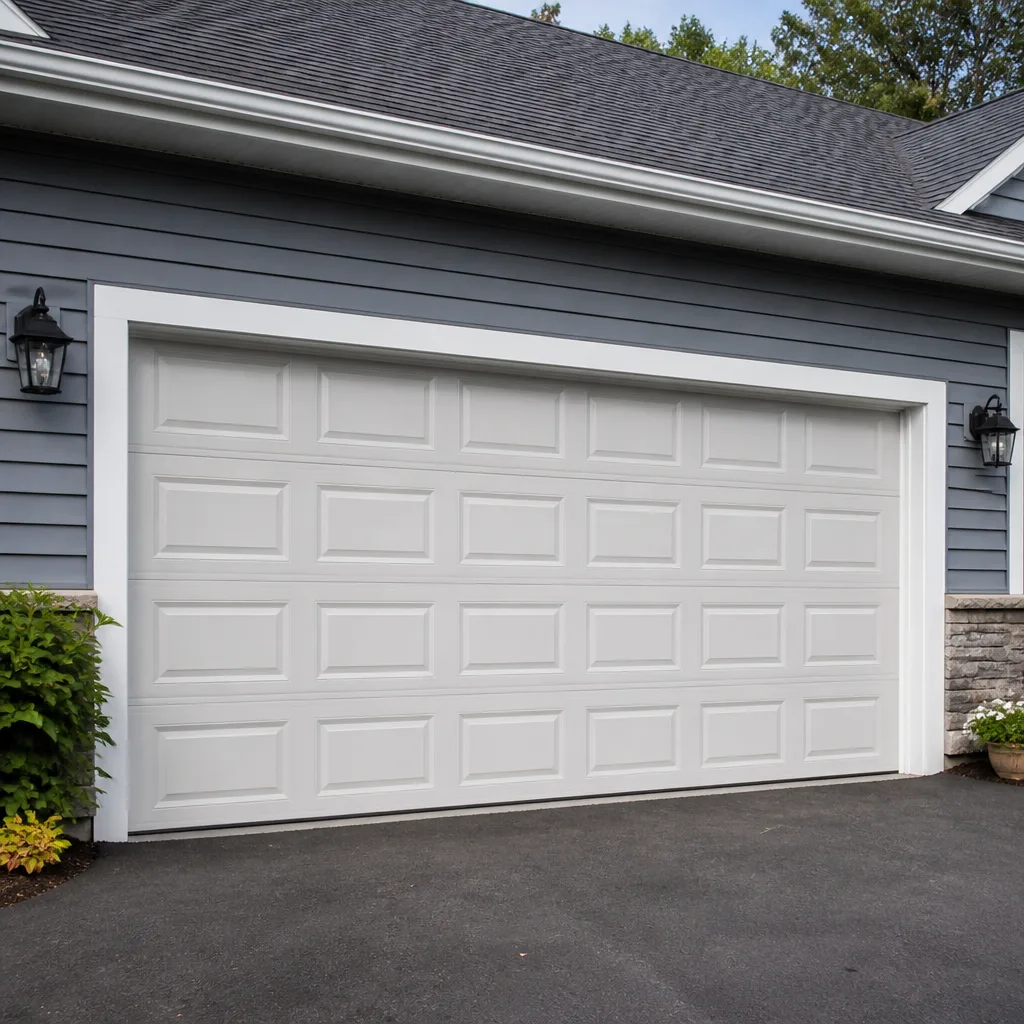 Raised-panel steel
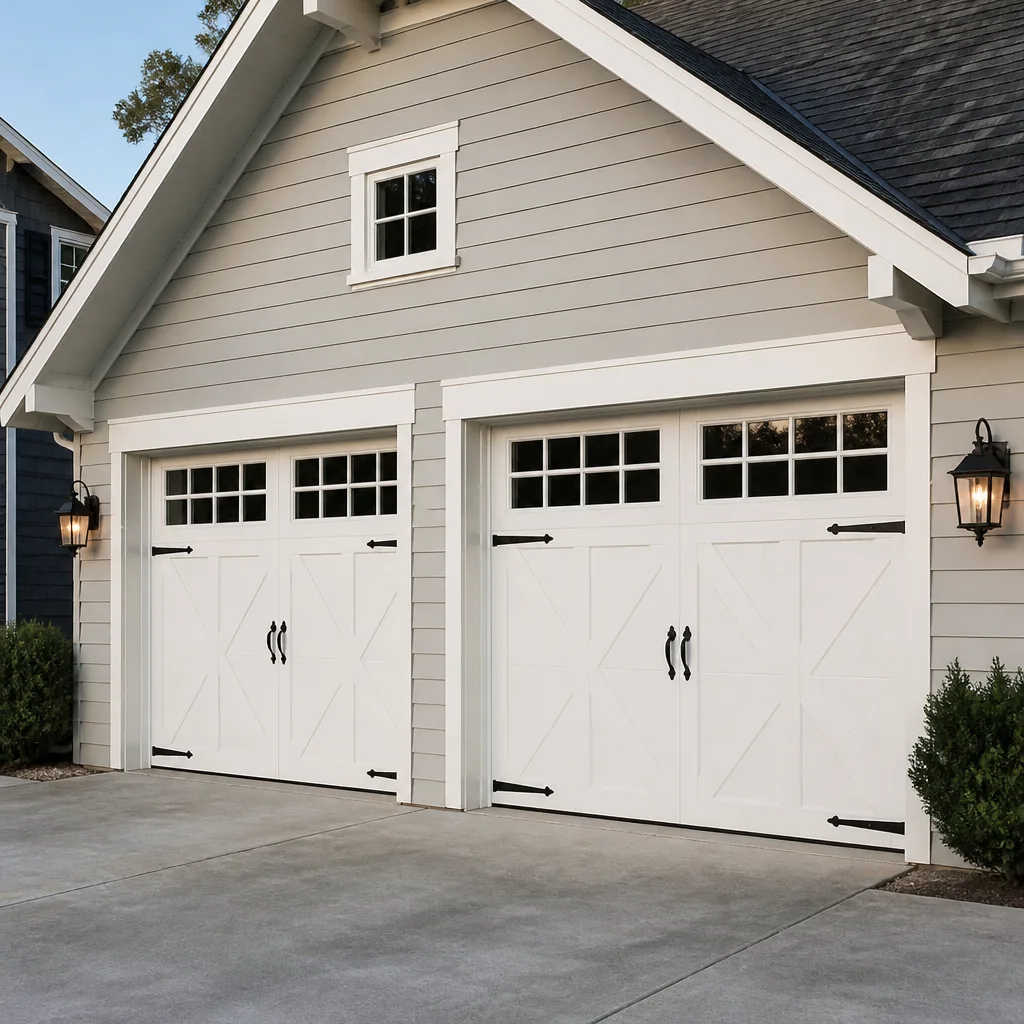 Carriage house
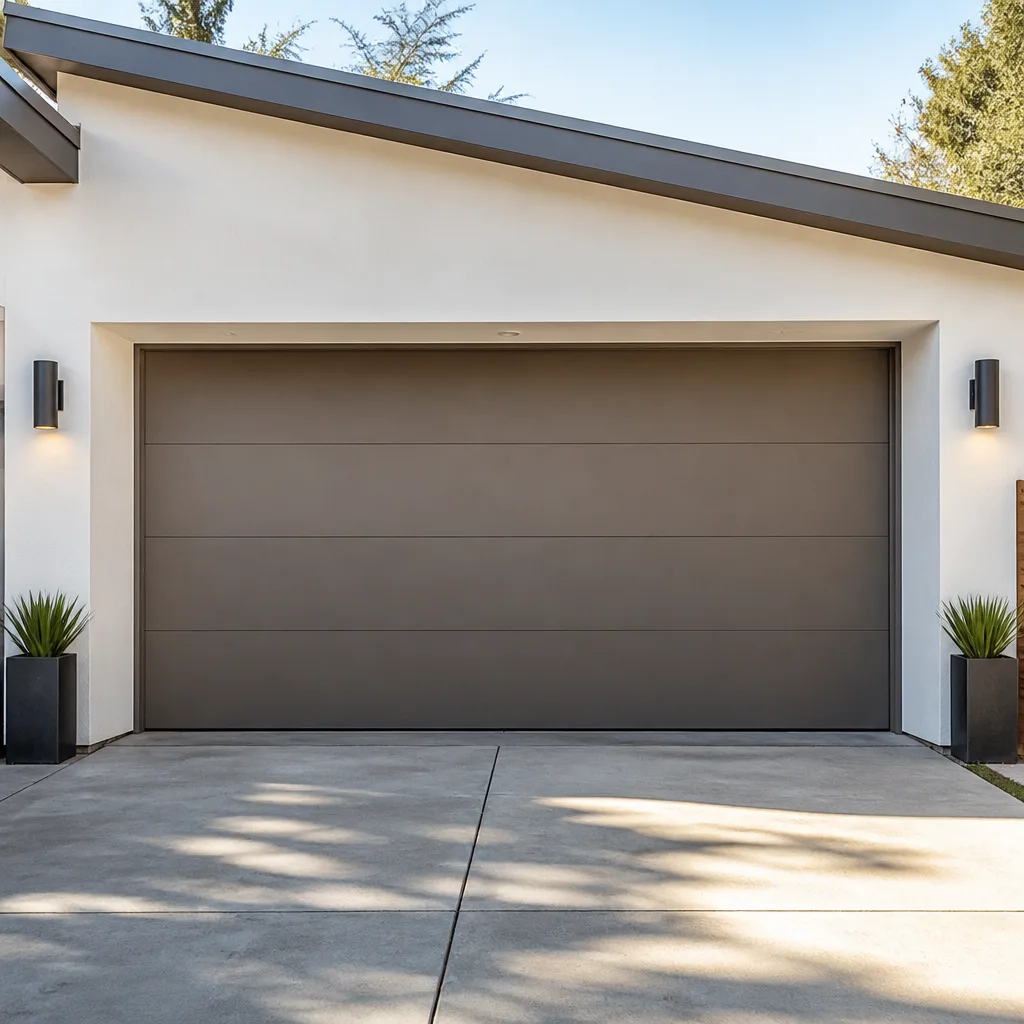 Modern flush
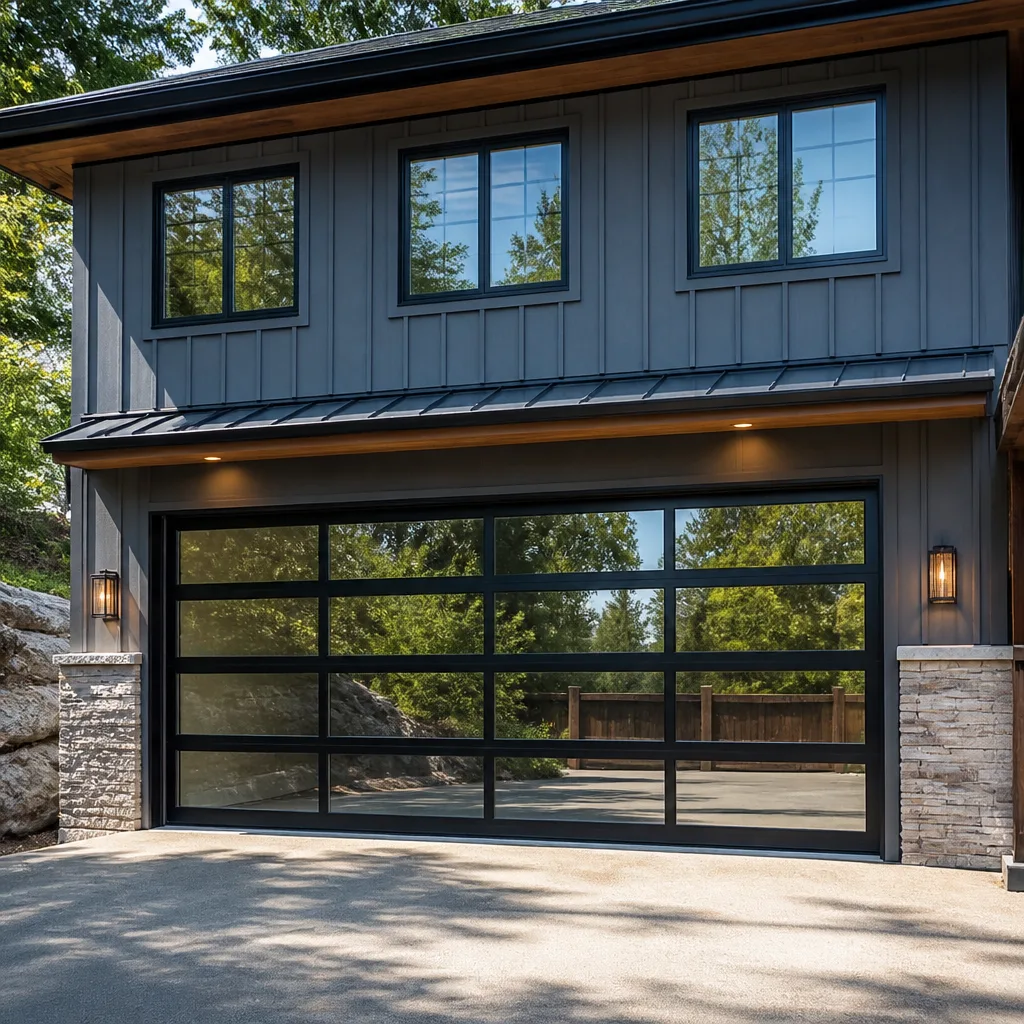 Full-view glass
 LiftMaster openers
 Chamberlain openers
Full 25-point door and opener safety check with every visit - springs, cables, rollers, tracks, and your LiftMaster or Chamberlain opener included
You get a price before we start. It does not change when the pro arrives.
Get your free estimateGarage Door Warning Signs: A Wilmington Homeowner’s Reference Guide
A garage door that hesitates for half a second before moving isn’t “just getting old.” It’s a specific mechanical signal, and in most cases it points to one of four fixable problems: a spring losing tension, a cable starting to fray, a roller binding in its track, or an opener straining against a door that’s gotten heavier than it should be. Each of those gets worse on its own schedule, and the cost of ignoring them climbs faster than the repair. This guide maps the symptoms Wilmington homeowners describe to us most often to the parts behind them, ranks each sign by urgency, and explains why a door that fails every third open is more dangerous than one that stops dead. Read it once and you’ll know what your door is telling you.
Quick Answer
Garage door warning signs fall into three urgency tiers: stop using the door today (a snapped or visibly stretched spring, a cable off its drum, the door sitting crooked), schedule within a week (grinding or squealing, jerky travel, an opener that reverses before closing), and monitor (a single new rattle, a slightly slower open). The single most important rule: a torsion spring or lift cable under tension is not a homeowner repair. Call a trained technician for anything that involves the springs, cables, or drums above the door.
Styles & brands we work with
- Raised-panel steel
- Carriage house
- Modern flush
- Full-view glass
- LiftMaster openers
- Chamberlain openers
Table of Contents
- What the noise is telling you: symptom-to-part mapping
- Movement irregularities and what they mean
- The visual checks that catch failures early
- Urgency triage: stop today, schedule this week, or monitor
- Why intermittent problems are the most dangerous kind
- How to describe a symptom so you get a useful phone diagnosis
- The three warning signs Wilmington homeowners dismiss most
- Common mistakes to avoid
What the Noise Is Telling You: Symptom-to-Part Mapping
Sound is the first diagnostic tool a technician uses, and it’s one you can use too. A garage door is a system of moving metal under load, so every noise comes from a specific contact point between parts. When a homeowner in Wilmington calls and says “it’s making a noise,” the follow-up question is always the same: what kind of noise, and where does it come from? Here’s how the main sounds map to parts.
- Grinding, like metal on metal: Usually a roller that has lost its bearing grease, or a hinge that’s dried out. Left long enough, a seized roller will wear a groove into the track itself, which turns a cheap roller swap into track work.
- Squealing or high-pitched screeching: Typically a dry torsion spring, a dry bearing plate, or a nylon roller that has worn through to the metal shaft. This one is often a lubrication and inspection issue rather than a failure.
- Loud bang from the garage, like a gunshot: That’s a torsion spring breaking. It’s the most common sudden failure on any door with a torsion system, and the door will not lift safely afterward because the counterbalance is gone. Stop using it.
- Rattling that started suddenly: Loose hinge bolts, a bracket working free, or a panel that’s come slightly out of its stile. Sudden onset is the key word here. A rattle that appeared this week deserves a look.
- Popping or snapping during travel: A cable jumping on its drum, or a roller catching at a track joint. Both can lead to a cable coming off, which is a genuine safety event.
One note on noise and climate: in our experience, doors in Delaware tend to get noisier as the seasons change, because metal contracts in cold snaps and the track, hinges, and spring system all shift slightly. A rattle that appears on the first cold morning of the year and disappears by afternoon is usually harmless seasonal movement. A rattle that shows up and stays is different, and that’s the one worth chasing. If the noise is coming from the opener itself, that’s usually a separate diagnosis, and our guide to garage door opener repair covers those symptoms in detail.
Movement Irregularities and What They Mean
How the door moves says as much as how it sounds. A healthy door travels in a smooth arc at a steady pace, with the opener doing relatively little work because the springs carry most of the weight. When the movement changes, something in the balance is off.
- The door hesitates before it moves. A half-second pause at the start often means the opener is working against a spring that’s lost tension. The springs aren’t lifting the door the way they should, so the opener has to make up the difference. That’s an opener being worn out by a spring problem.
- The door jerks or stutters going up or down. This is usually a binding roller, a bent track section, or a misaligned panel. Jerky travel puts stress on the whole system, including the opener’s gear and rail, and can break a hinge or a bracket.
- The door drifts back down after stopping. A door that won’t hold at the top has a balance problem. The springs are no longer carrying their share.
- The door closes and immediately reverses. If this happens with no obstruction, the opener’s safety sensors or travel limits need adjustment. But it can also happen when the door binds on the way down, and the opener reads the resistance as an obstruction. Same symptom, two very different causes.
- The door rises unevenly, one side higher than the other. That’s a cable or spring imbalance, and it’s the warning sign that most directly precedes a cable coming off the drum. Stop using the door.
When a Wilmington homeowner tells us the door “only hesitates a little,” we hear a system telling us a spring is losing tension. The door still works, which is exactly why people wait. It’s also why the eventual repair involves the track, the rollers, or the opener rather than just the spring. Our garage door spring repair page explains what a spring job actually involves, including why the two-spring pair on most modern doors should be replaced together.
The Visual Checks That Catch Failures Early
Some of the most useful warning signs are things you can see from the garage floor, without touching anything under load. Run through this list once a season. It takes about two minutes.
Look at the springs and cables
If your door has torsion springs on the header above the opening, look at the coils. A spring with a visible gap between the coils, or one that looks stretched or relaxed compared to the spring beside it, is a spring that’s failing. If your door has extension springs along the tracks, look for any separation or gap in the spring body.
Now look at the cables. On a torsion system, the cables run from the bottom corners of the door up to the drums at each end of the shaft. A cable that’s frayed, has a kink, or is visibly loose is a stop-today sign. Never try to re-seat a cable or touch a spring, either type, while the door is attached and under tension.
Look at the door and the track
- Panels: cracks, dents, or bending along a stile or hinge. A bent panel causes a binding edge that wears out the rollers fast.
- Track: bends, dents, or gaps where track sections join. Track can absorb damage from a light bump with a car and look fine while quietly misaligning the door.
- Rollers: cracked, flat-spotted, or missing rollers are common and cheap to replace. A worn metal roller is often the source of that grinding sound.
- Hinges and brackets: loose bolts, or rust flaking on the hinges. Loose hinges let the panels move independently, which puts wear on the edges of the panels themselves.
- Seal at the bottom: a torn bottom seal lets water and debris into the garage and can cause the door to bind on the jamb.
Doors made of steel, wood, and aluminum-composite panels all fail a bit differently. Wood can swell in humid weather and bind at the hinges; steel panels can rust at the bottom edge; a Wayne Dalton door with a specific panel style can have different hinge patterns than a Clopay door. That’s one reason brand coverage matters in a service call: if a company can’t source or service the door you have, they’ll either turn the job down or substitute a part that doesn’t fit. We work on the major brands, including Wayne Dalton, Amarr, Craftsman, and Raynor, and the parts we recommend match the door that’s actually installed. Our garage door repair page covers the full range of component repairs we take on.
Urgency Triage: Stop Today, Schedule This Week, or Monitor
Not every warning sign needs a same-day response, but a few absolutely do. Here’s how to sort what you’re seeing. Use the leftmost category that fits.
Stop using the door today
- A torsion spring that has snapped (you’ll know, it’s loud) or looks visibly stretched with a gap in the coils.
- A cable that’s off its drum, frayed, kinked, or hanging loose.
- The door hanging crooked, or one side of the door higher than the other.
- The door falling faster than it should, or drifting down when left open.
- Any time you’ve seen the door come off its track, even if it looks fine now.
These are counterbalance and cable-system failures. The door itself can weigh 100 to 200 pounds or more, and if the spring or cable lets go, that weight comes down without warning. A trained technician should be the one to work on the springs and cables. This is not a job to learn on your own door.
Schedule within a week
- Grinding or squealing during travel.
- Jerky or uneven movement.
- An opener that reverses before closing, or that struggles to lift the door.
- Bent track sections that still let the door travel.
- Cracked or flat-spotted rollers, and loose hinges.
These are the wear-and-tear problems. Left a month, they start eating other parts, and a $30 roller becomes a track section and a set of rollers.
Monitor
- A single new rattle that hasn’t changed in a week.
- A door that feels slightly slower than it used to, but still runs evenly.
- A minor dent from a light bump that hasn’t affected travel.
Check back in a week. If it’s progressing, move it up a category.
One important note for Wilmington homeowners: whether your garage is attached to the house changes the urgency of all of these. A door that fails on a detached garage is an inconvenience. A door that won’t close on an attached garage opens your home to the yard, and that’s the situation that makes a same-day call worth it. We offer same-day and emergency service for exactly that reason, and on a call outside dispatch hours we book you into the next opening. Call (877) 780-7403. We answer 24/7. Fast dispatch from 7am to 7pm, Sunday through Friday; we’re closed Saturday.
Why Intermittent Problems Are the Most Dangerous Kind
A door that fails every time is a door you can’t use, so you deal with it. A door that fails every tenth open is a door you keep using, and that’s what makes it dangerous. Here’s the failure mode most homeowners never hear explained.
Intermittent faults have two possible causes, and the difference matters. The first kind is a sensor or control fault. A safety sensor with misaligned lenses, a loose wire at the wall button, a logic board in the opener that’s starting to fail. These are genuinely annoying but rarely dangerous, because they trip the opener’s safety reversal instead of letting the door run.
The second kind is a mechanical fault that only shows up under a certain load. A cable that’s sitting near a drum edge and slips only on a cold morning when the metal has contracted. A roller that binds only when the door is halfway up, at the exact angle where its bearing catches. A spring whose tension is already compromised and which fails on the one open where the door is a little heavier than usual. This is the dangerous kind. It means the door has an undiagnosed weakness, and a door that half-fails once and then “works fine” is a door that’s going to fail completely, on the worst possible day, often with someone underneath.
There’s a real trap in a garage door’s design here. If a door only fails intermittently, it almost always does so while stationary. The door won’t open; you press the button again; it opens. That slight stop and restart applies an extra load to the springs and cable on the next travel. A stuck door that you “coax” through three or four start-and-stops in a row barely sounds like a mechanical risk. But in our experience, this is the pattern most often preceding a spring or cable failure.
The practical rule: a repeated, consistent symptom gets an inspection. An intermittent symptom gets an inspection and a diagnostic call the same week, because the pattern of the failure is the diagnostic evidence. That’s what a technician uses to find the fault, and it’s why describing it accurately on the phone helps. Our Wilmington Garage Door Repair Co technicians work only on garage doors, so the pattern of “opens fine, sticks occasionally” is one we see across brands and systems from Craftsman openers to Raynor doors. We don’t need to have seen your exact door to recognize your exact symptom.
How to Describe a Symptom So You Get a Useful Phone Diagnosis
A call to a garage door specialist goes best when the description is specific. “It’s broken” and “it makes a noise” are both accurate and both nearly useless on the phone. The more specific your description, the more likely you’ll get a useful preliminary diagnosis before anyone drives out. Here’s the sequence that gives the best information.
- Describe the motion, not the emotion. “The door goes up about a foot and stops” is useful. “It won’t work” is not. Note how far it travels, whether it changes direction, and whether it reverses.
- Describe the sound and where it comes from. Grinding, squealing, scraping, banging, or popping. Then locate it: from the top of the door opening, from the track on one side, from the opener itself. This single detail often points to the exact assembly.
- Note what changed and when. “It started after the cold snap” is helpful. Doors and openers respond to seasonal temperature, and a symptom tied to a cold morning or a humid day tells a technician a lot about why it’s happening.
- Say what the door is doing by hand, if you can safely test it. With the opener disconnected (most openers have a red emergency release handle you can pull with the door closed and no one underneath), the door should lift easily and stay in place when you let go at about knee height. If it’s heavy or won’t hold, that’s a balance problem. If you’re not confident doing this, skip it and say so. Don’t test it if anything looks visibly broken.
- Identify your door and opener brands if you know them. A photo of the door, the opener’s model label, and the spring system above the door saves time. This matters most if you’ve got an older or less common brand. It’s also the reason we cover the majors: LiftMaster, Chamberlain, Genie, Clopay, Amarr, Wayne Dalton, Craftsman, and Raynor.
- Say what you’ve already tried. Changed the remote battery, checked the breaker, realigned the safety sensors. That way the diagnosis doesn’t start from zero.
That last detail matters in practice. When someone calls and says “the door stutters going up and squeals when it’s cold,” we have a very different conversation than when someone calls and says “it’s broken.” The phone diagnosis isn’t a replacement for actually looking at the door, but it tells you what the likely problem is and whether it’s urgent enough to stop using the door today.
The Three Warning Signs Wilmington Homeowners Dismiss Most
These are the three that show up again and again in calls where the eventual repair could have been simpler and cheaper if someone had acted a week earlier. Each one has an explanation that makes it easy to wave off, and each one has a specific consequence.
1. The “quiet” door that just feels heavier
No noise, no jerking, just a door that takes a bit more effort from the opener to lift. Homeowners put this down to the cold, or to the door getting older. In our experience, a slowly increasing load is the earliest sign a torsion spring has lost its tension. The door will still open for weeks, which is the problem. Meanwhile the opener is doing work the spring used to do, and opener gears and drive assemblies wear out from that load. A spring replacement is one job; a spring plus an opener is a bigger one. The test is the hand test described above, or just a look at the door’s travel speed.
2. The door that drops the last few inches faster than it used to
This gets mistaken for a design quirk because it happens every time, and it’s more noticeable when the door is nearly closed. It’s not normal. A door that speeds up near the floor means the springs are not resisting the full travel. It’s a soft spring or a cable that’s beginning to lose tension. This is one of the most direct predictors of a spring failure, and it’s the one homeowners notice and explain away the most often. If a door “always finishes with a bang,” that bang is a real symptom.
3. The single visible cable kink
A small kink in a lift cable looks minor. Cables are strong, and the kink is usually near the drum where it’s less visible. But a kink means the strands inside the cable have already started to separate or deform, and that’s a failure in progress. A cable that comes off the drum at speed can fling loose under tension and damage the door or whatever’s underneath it. This is not a “wait and see” item. A kinked cable is a stop-today sign, and within days it can become a cable failure.
All three signs share a theme. They don’t stop the door, they just make it work a little less well, and homeowners have a strong instinct to wait for an actual failure before calling. That instinct is backwards for these three, because each one has a follow-on repair that’s bigger than the fix would have been. Spring and cable work is also exactly the wrong thing to try at home: the tension in these systems can injure a person badly, and a trained technician is the only sensible route. If you’re seeing any of the three, the call to make is (877) 780-7403. We answer 24/7, with fast dispatch from 7am to 7pm, Sunday through Friday. The estimate is free and the price is set per job by the written quote.
Common Mistakes to Avoid
- Treating a torsion spring like a car part you can stretch or adjust. Torsion and extension springs carry stored energy and can release it suddenly. Adjustment is a technician job, and asking a general handyman to “take a look” at a spring is a mistake. Our technicians have up to 8 years of experience on exactly this kind of work.
- Calling a general handyman for a door problem. Years of multi-trade handyman experience doesn’t include a door’s counterbalance system, alignment, or opener logic. A specialist will diagnose correctly the first time instead of patching the symptom.
- Ignoring a door that reverses when it shouldn’t. Many homeowners assume the safety sensors are the cause and leave it, when the actual problem could be binding on the way down. If the door reverses without an obstruction, it warrants a check.
- Greasing the track. Track should stay clean and dry. Lubricant on the vertical track attracts dust and hair and then binds the rollers it was meant to help. The parts that need lubrication are the hinges, rollers, and spring system, and a technician can show you which.
- Replacing a remote and assuming that’s the opener problem. A remote that intermittently fails is usually a battery or a receiver issue, not the opener’s logic board. But if the wall switch works and the remote doesn’t, and you’ve ruled out the battery, the diagnosis belongs on the receiver side of the opener.
- Ignoring the bottom seal during Delaware’s wet months. A torn bottom seal lets water onto the garage floor and can cause a door to bind at the threshold. It’s a cheap replacement now and a floor problem later.
- Letting a door run on a bent track because “it still goes.” A bent track is a binding edge. Every open and close wears the rollers and panels against that bend, and the eventual repair includes the track, the rollers, and possibly the panel it damaged.
See the difference
 Before
 After
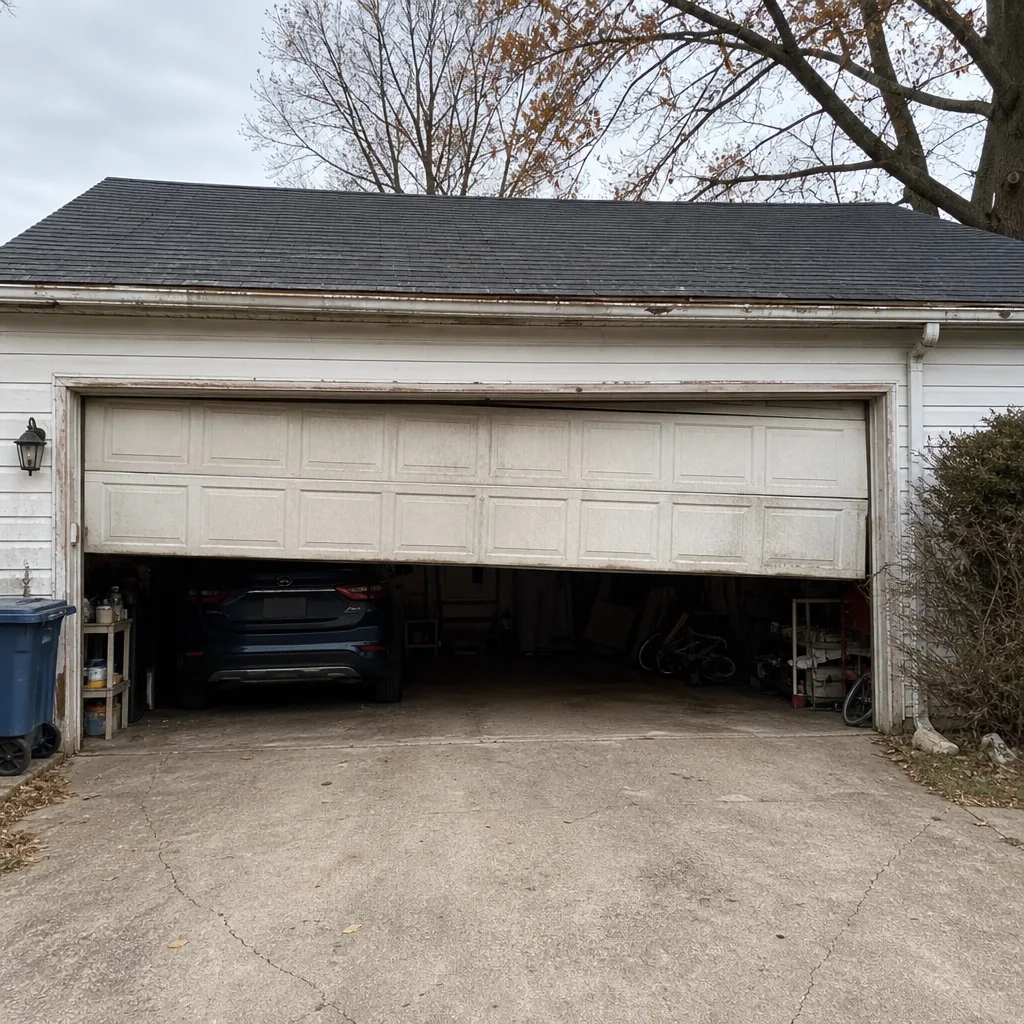 Before
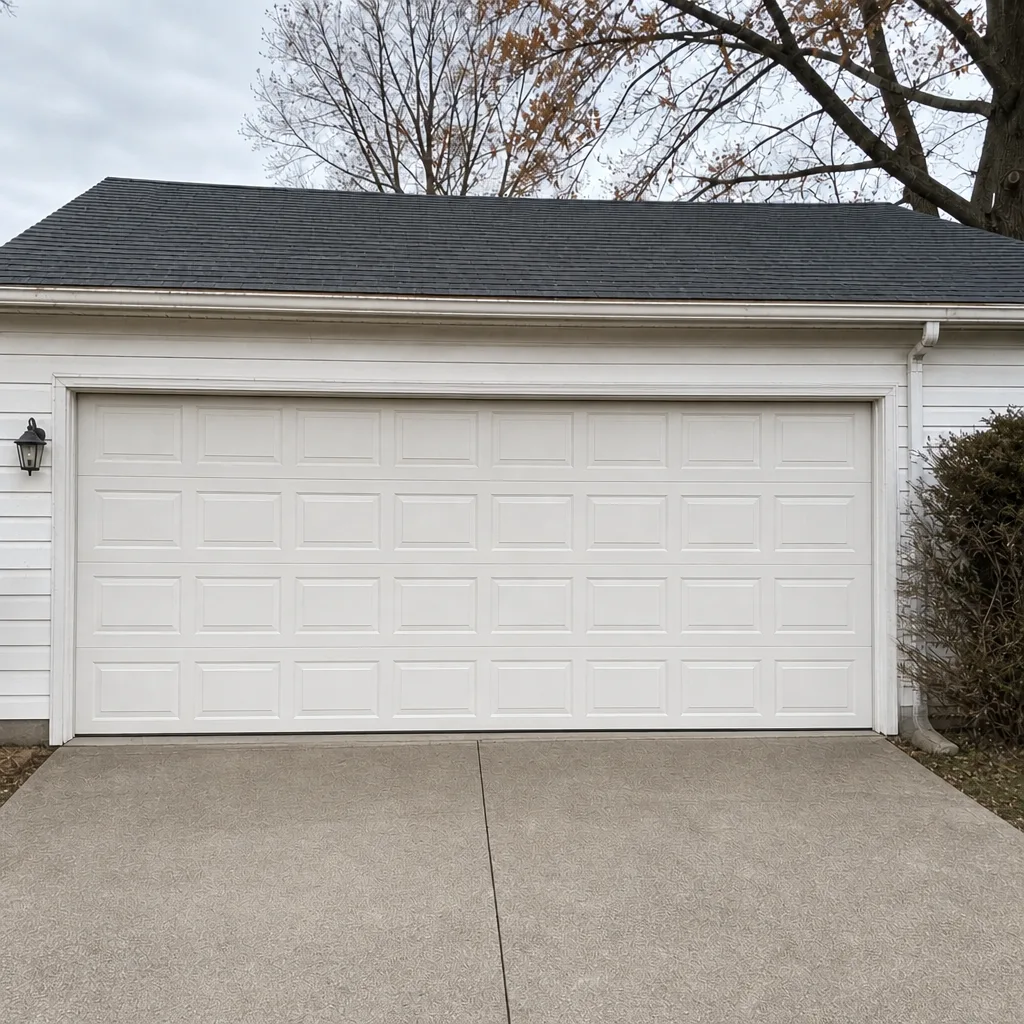 After
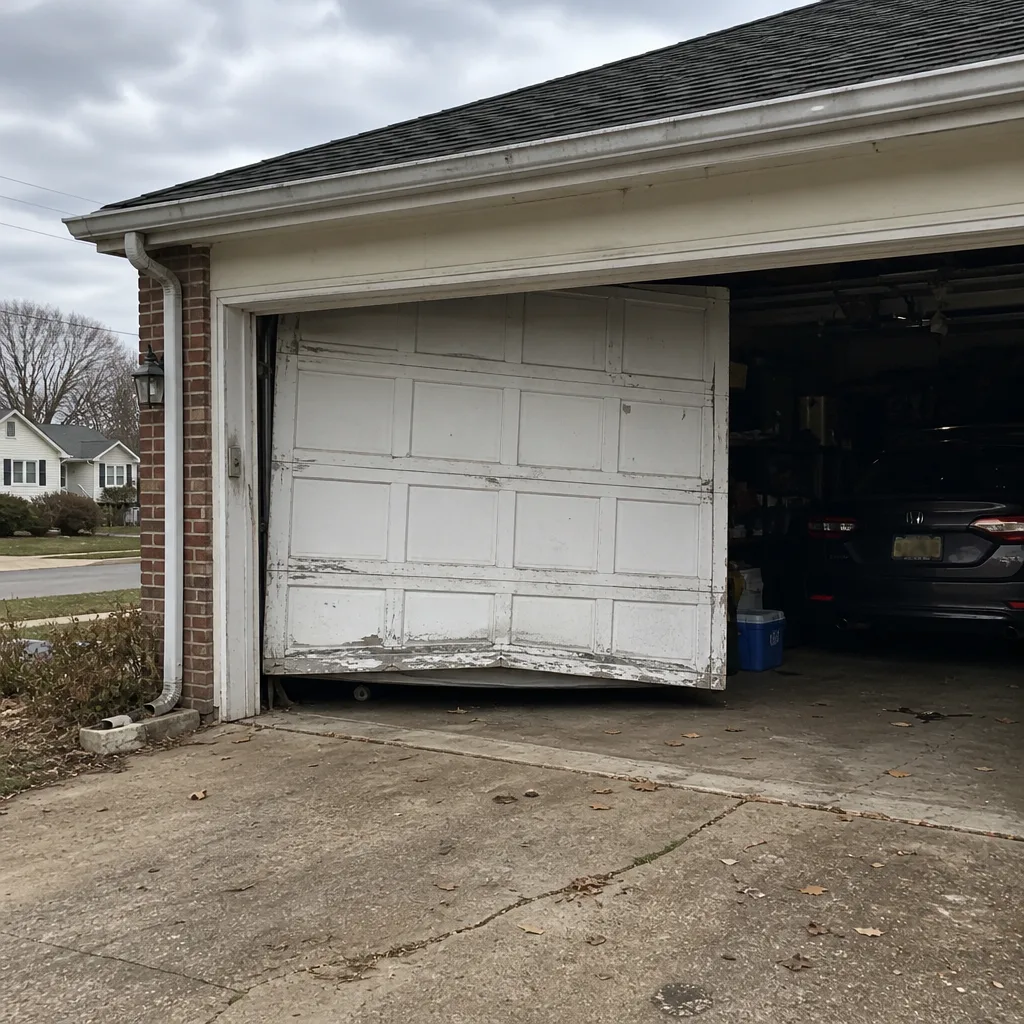 Before
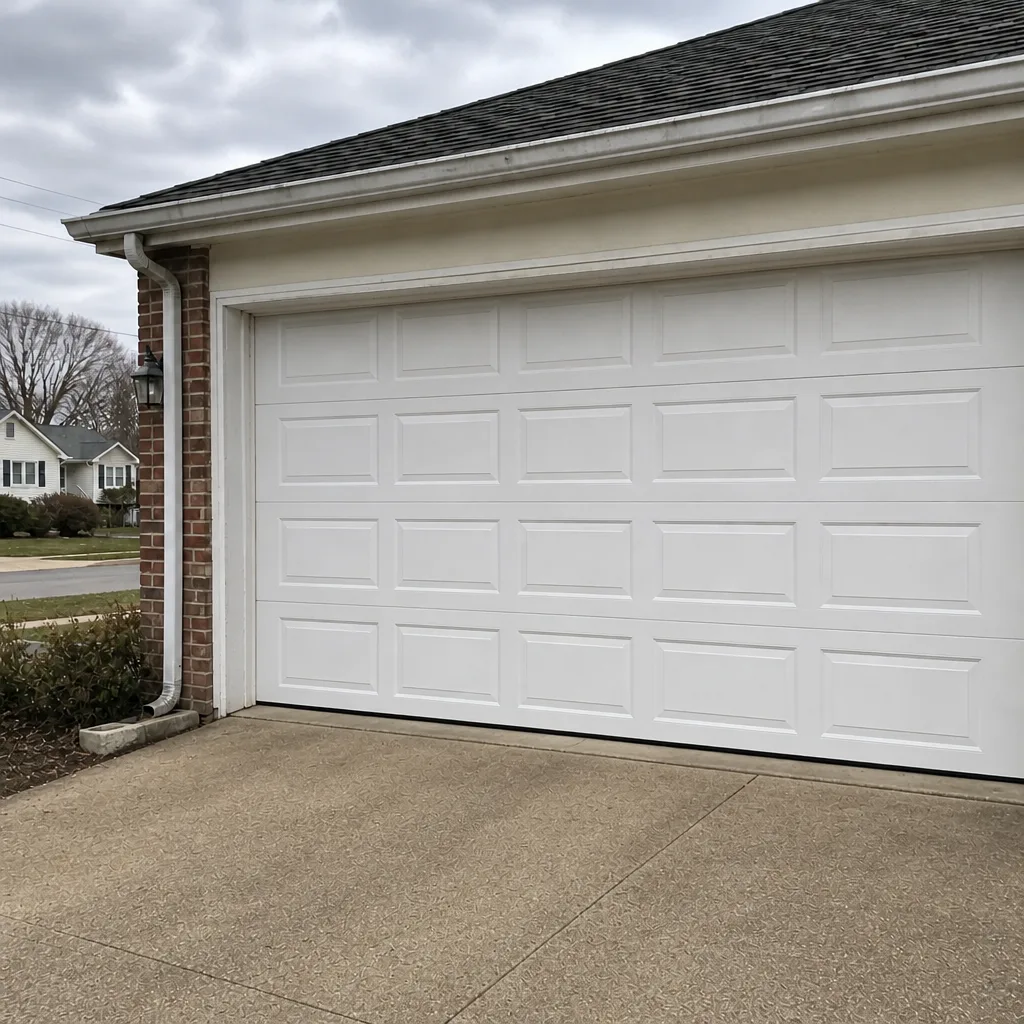 After
When to Call a Professional
Call today, before using the door again, if you see any of these: a snapped or visibly stretched spring, a cable off its drum or kinked, the door hanging crooked or moving unevenly, a door that drops faster than it should near the floor, or a door that has come off its track. Call within the week for grinding, jerky travel, an opener that reverses before closing, or any intermittent symptom that’s been recurring. In both cases, the estimate is free and the price is set per job by a written quote before any work starts. You’ll know the cost before anything is disassembled, and the quote you agree to is the price. Wilmington Garage Door Repair Co offers free estimates in Wilmington. Call (877) 780-7403. We answer 24/7. Fast dispatch from 7am to 7pm, Sunday through Friday; we’re closed on Saturday.
Frequently Asked Questions
A snapped or visibly stretched torsion spring, a cable off its drum, or a door that’s hanging crooked. These are counterbalance and cable failures, and the door should not be used until a trained technician has worked on it. The door itself can weigh 100 to 200 pounds or more, and without a working spring or cable system that weight is uncontrolled.
No. Torsion and extension springs hold stored energy that can release suddenly and cause serious injury, and the tools and procedures require training and skill. We recommend a professional for any spring work. Our technicians have up to 8 years of experience with this exact repair, and our garage door spring repair page explains the process.
Intermittent problems are often the most dangerous kind, because they can point to a mechanical fault that only shows up under a certain load, like a cold morning or a specific position in the door’s travel. A door that half-fails once and then works “fine” is a door that needs a diagnostic check the same week. Call (877) 780-7403 for an exact quote. Estimates are free.
No. A rattle that appears on a cold morning and disappears once the day warms up is usually seasonal metal movement, and a squeal from a dry hinge is often just a lubrication issue. But grinding, popping, or a loud bang from the garage is a genuine warning sign and warrants a professional look.
The estimate is free, and pricing is set per job by the written quote. It covers the diagnostic inspection, a clear explanation of what’s wrong, and the parts and labor for the repair, quoted before any work begins. The price you agree to before work starts is the price, so there’s no surprise invoice after the job.
Only if the inspection reveals a genuine difference from what was quoted, and in that case you’ll hear it from the technician before any extra work starts. The written estimate you agree to is what gets billed. If a spring job turns out to include a bent track, you’ll get a revised quote before that additional work begins. Call (877) 780-7403 for an exact quote. Estimates are free.
We work on the major brands, including LiftMaster, Chamberlain, Genie, Clopay, Amarr, Wayne Dalton, Craftsman, and Raynor. We don’t turn away jobs based on the brand, which means a call for garage door opener repair doesn’t become a conversation about who made the opener. A photo of the door and opener label helps the phone diagnosis.
If the door won’t close and it’s on an attached garage, or if you see any spring or cable failure, treat it as urgent. A door left open on an attached garage exposes the house. For straightforward wear-and-tear symptoms, a scheduled repair within the week is reasonable. Call (877) 780-7403. We answer 24/7. Fast dispatch from 7am to 7pm, Sunday through Friday.
The Bottom Line
Every garage door failure starts as a warning sign. The half-second hesitation, the grind on the way up, the door that finishes with a bang, the small kink in the cable. Each one points to a specific component, and each one has a predictable repair. The three categories are simple: stop using the door for spring and cable failures, schedule within a week for grinding and irregular travel, and monitor the single new rattle. The big rule doesn’t change: springs and cables are technician work. Get in front of the failure and the repair is smaller, the schedule is easier, and the door stays out of your morning. Wilmington Garage Door Repair Co can take a look. Call (877) 780-7403 for a free estimate.
Written by the team at Wilmington Garage Door Repair Co.