
Last updated November 21, 2026
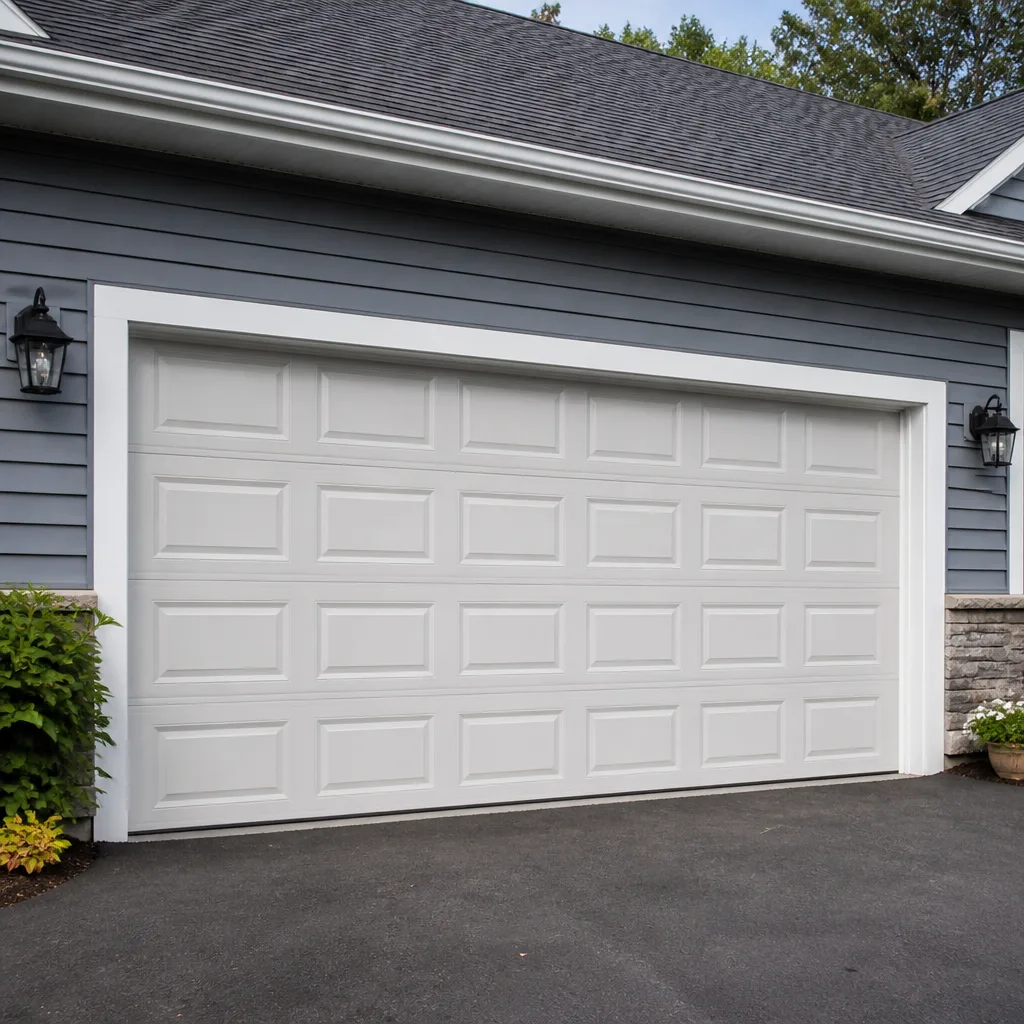 Raised-panel steel
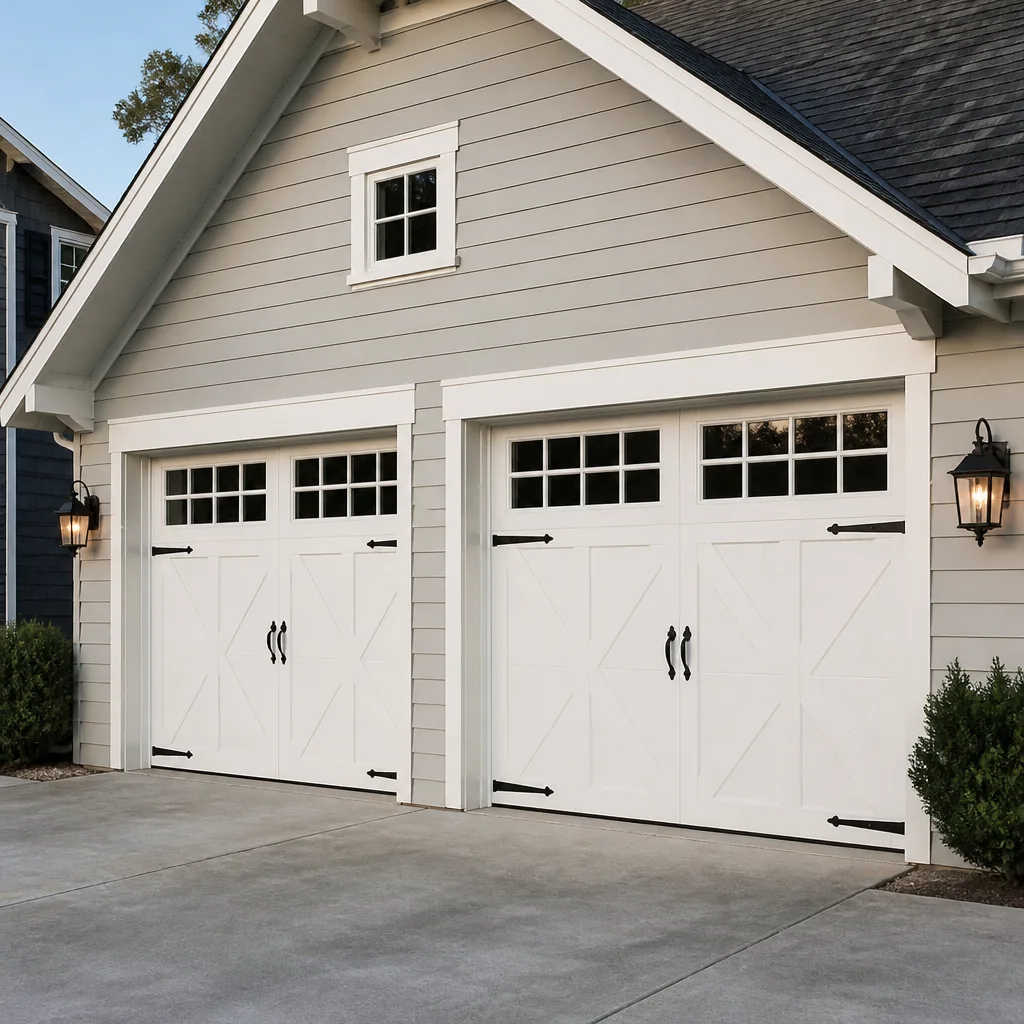 Carriage house
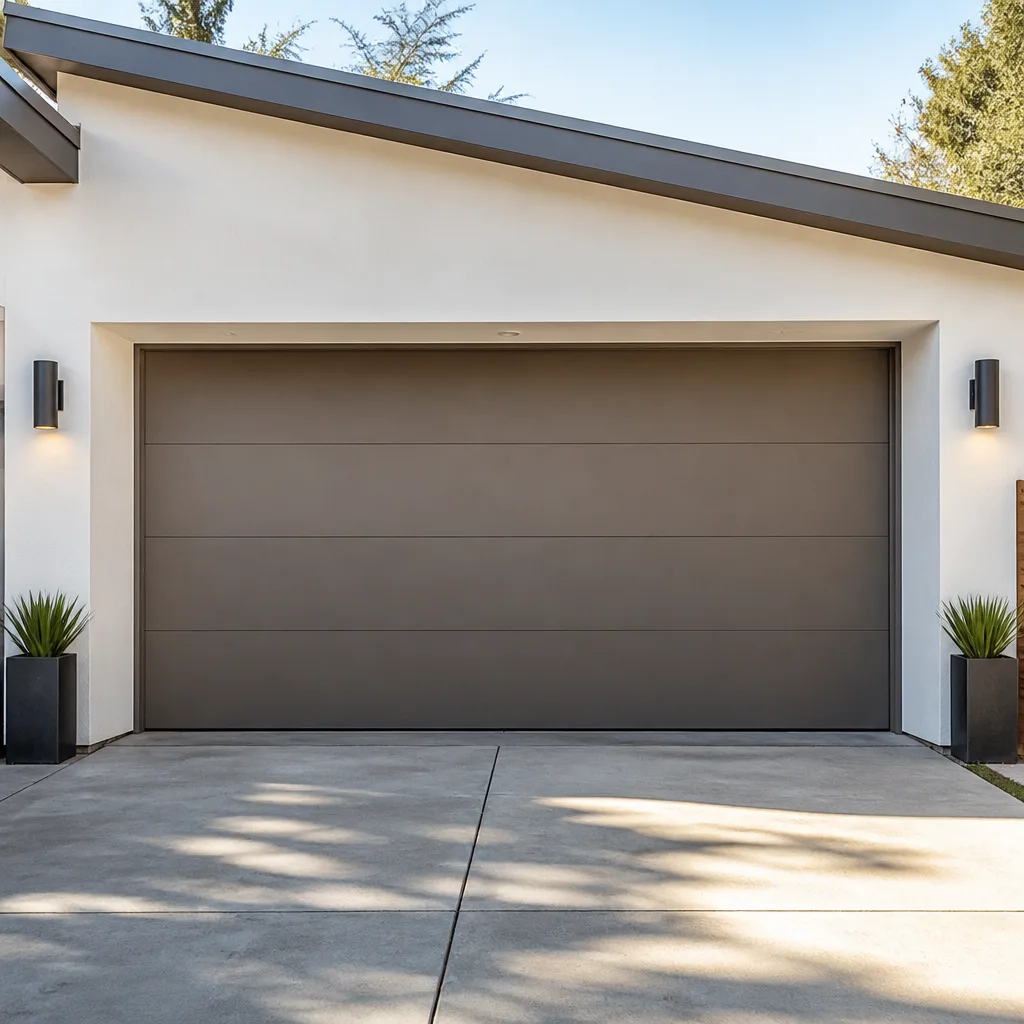 Modern flush
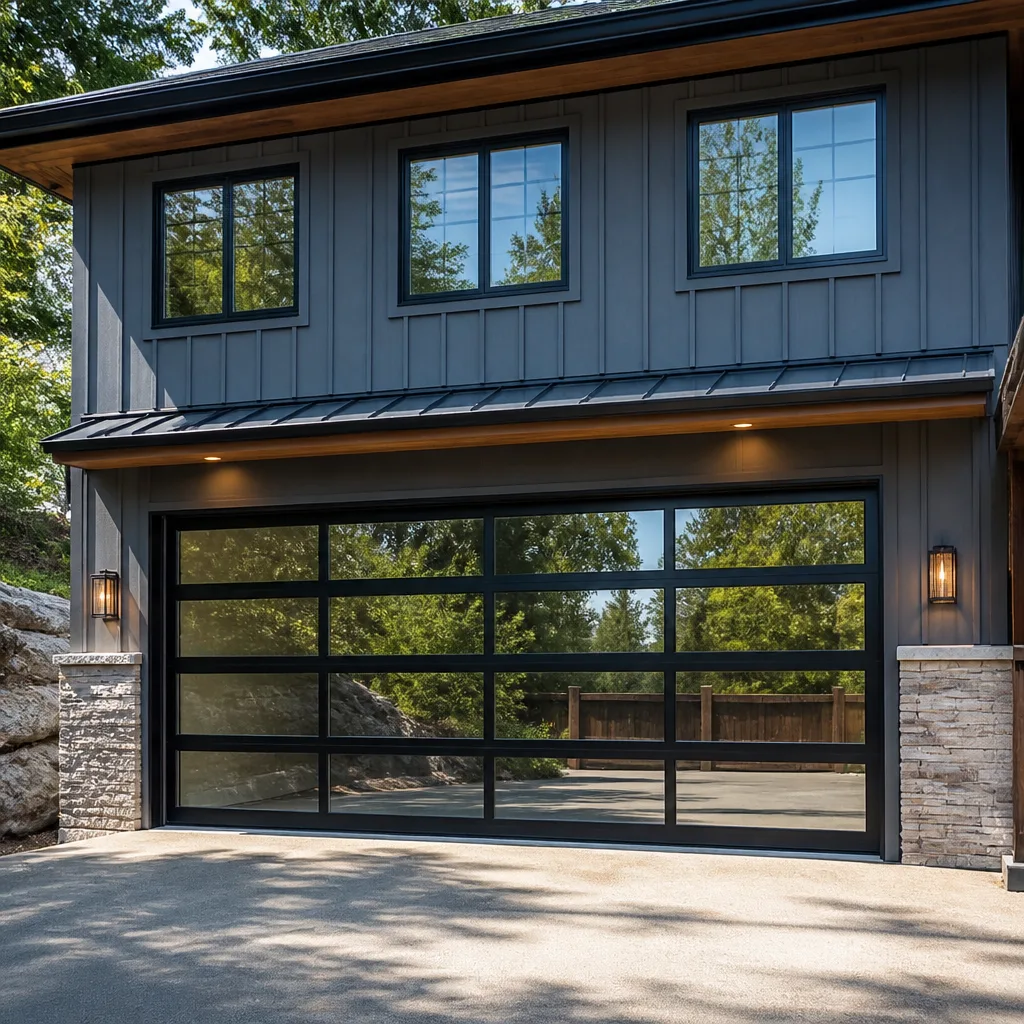 Full-view glass
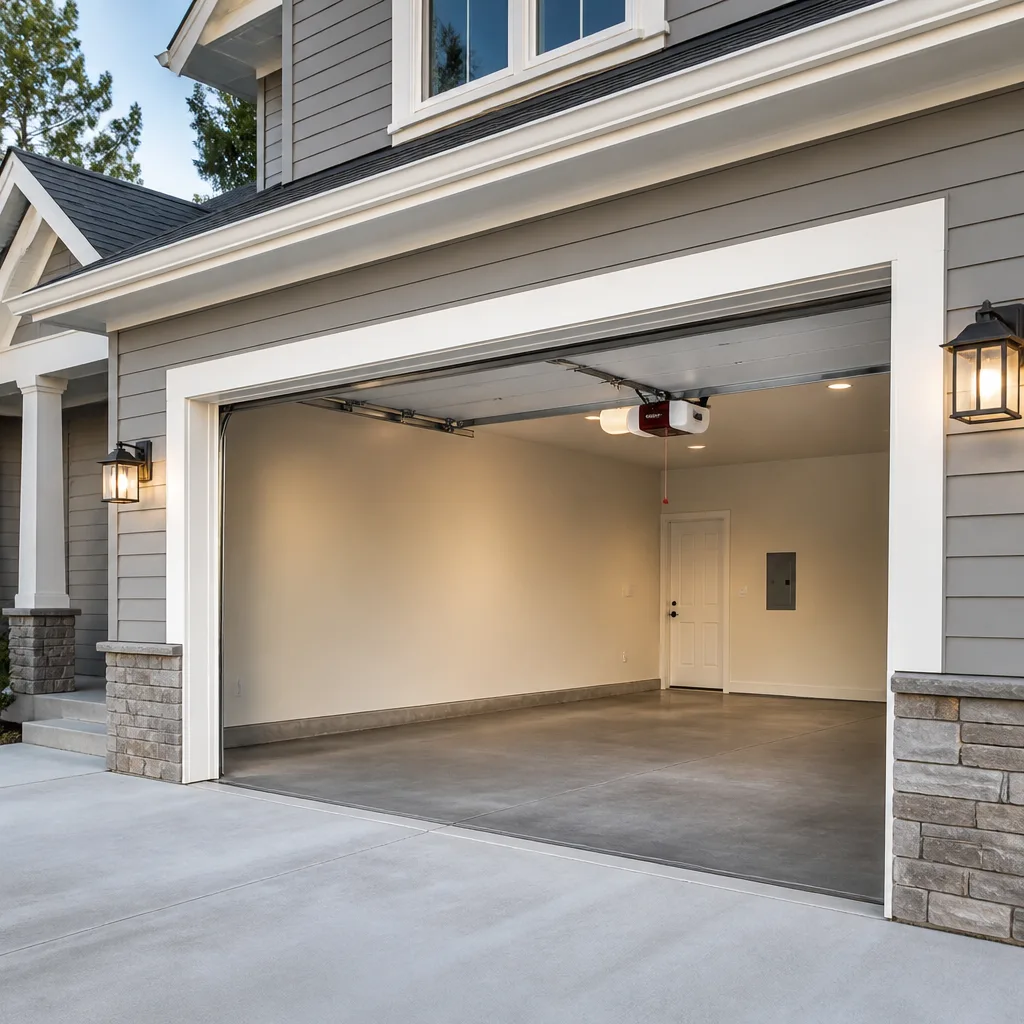 LiftMaster openers
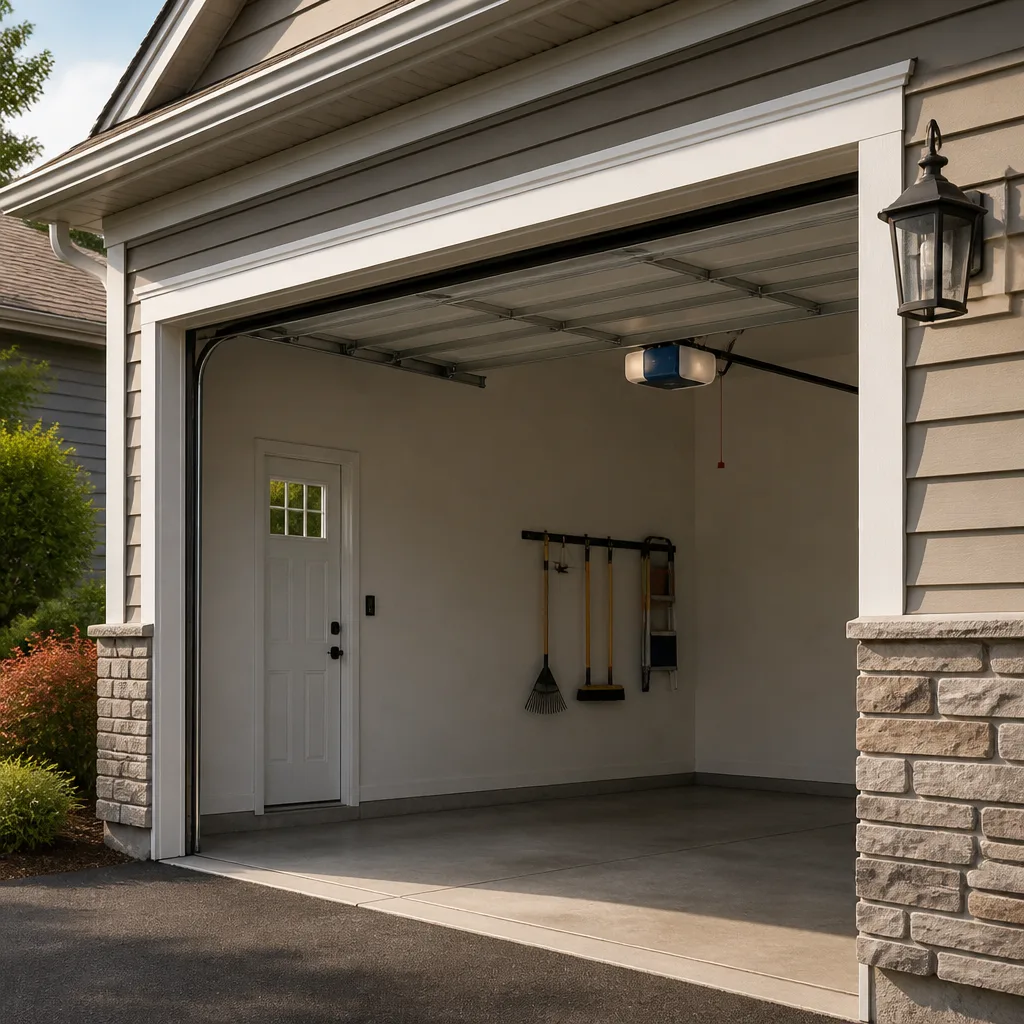 Chamberlain openers
Full 25-point door and opener safety check with every visit - springs, cables, rollers, tracks, and your LiftMaster or Chamberlain opener included
You get a price before we start. It does not change when the pro arrives.
Get your free estimateThe Complete Guide to Garage Doors in Wilmington
Most Wilmington homes with attached garages were built before insulated doors became standard, and plenty of them were built before the garage was even meant to hold a car. That changes everything a national buying guide tells you. Recommended door sizes, R-values, opener types and header clearances are usually written for a suburban house built after 1990, not for a rowhouse off Union Street or a postwar ranch in Richardson Park. This guide maps each big decision – size, material, opener, insulation – to the housing stock and conditions Wilmington homeowners actually live with. You’ll finish knowing what to measure, what to ask, and when repair stops making sense.
Quick Answer
A garage door in Wilmington is a measured, ordered product, not an off-the-shelf purchase. You need the correct opening size and header clearance for your home type, a steel gauge and finish that can handle Delaware’s humid summers, and an opener matched to your ceiling height and spring setup. Spring and opener failures are repair calls we handle same-day, while a full replacement is scheduled around a free measure and a written price. The written estimate sets the final price, agreed before any work starts.
Styles & brands we work with
- Raised-panel steel
- Carriage house
- Modern flush
- Full-view glass
- LiftMaster openers
- Chamberlain openers
Table of Contents
- How Wilmington’s Housing Stock Shapes Your Door
- Sizing and Header Clearance: What to Measure
- Why Humidity Makes Steel Gauge and Finish Matter Here
- Brands You’ll Actually Find Through Local Dealers
- Repair or Replace? A Cost-Per-Year Framework
- Matching the Opener to Your Garage Configuration
- Insulation Choices for Wilmington Homes
- How a Typical Replacement Job Works, Step by Step
How Wilmington’s Housing Stock Shapes Your Door
Wilmington’s garages come in three rough families, and each one asks something different of a door. Knowing which family your home belongs to tells you more about your options than any generic buying chart.
Rowhouses and older city blocks. These garages were often squeezed into a rear lot or carved out of a first floor. Openings run narrow, ceilings sit low, and the framing may be older dimensional lumber. A door that fits a modern two-car opening won’t fit here, and header clearance is frequently the limiting factor for the opener, not the door itself.
Postwar ranches. Built through the 1950s and 1960s in neighborhoods like Richardson Park and Elsmere, these homes typically have a single-wide opening, a shallow garage depth, and a low ceiling. Many were built for a car that was smaller than what’s parked there now, so width matters as much as height.
Newer suburban builds. Construction from the 1990s onward usually brings standard two-car openings, higher ceilings, and framing designed for a modern insulated door. These are the easiest retrofits, though the door on them is often the original builder-grade unit and due for replacement.
In our experience, the most common surprise in Wilmington is discovering that the “standard” door everyone quotes online simply doesn’t exist for your opening. That’s why the measure comes first. If you’re not sure which category your garage falls into, garage door repair visits start with a measurement and a look at the framing.
Sizing and Header Clearance: What to Measure
Door size is only half the measurement. Header clearance – the space between the top of the opening and the ceiling – decides which openers will even work in your garage, and it’s where older Wilmington builds most often fall short.
Here’s what to collect before you talk to anyone about a replacement:
- Opening width and height. Measure the finished opening, not the door. Width at the widest point, height at the tallest.
- Header clearance. Measure from the top of the opening to the ceiling. Low-clearance garages need specific opener types, described further down.
- Side room. Measure from each side of the opening to the nearest wall. This determines track and torsion hardware placement.
- Back room. Measure from the opening into the garage to the back wall. Doors and tracks need depth to travel.
- Ceiling height and obstructions. Note any ducts, beams or light fixtures hanging into the door’s path.
Write the numbers down and keep them. Any reputable dealer will ask for them, and having the figures ready turns a vague phone conversation into a real quote. If your opening is unusually narrow, that’s not a dead end – it just means the door gets made to measure instead of pulled from stock. When a door is off its tracks or jammed, though, don’t force it while measuring. Shut it and call for repair.
Safety note: never try to measure or adjust anything with the springs above the door. Torsion and extension springs are under extreme tension and can cause serious injury if handled without proper tools and training. That work belongs to a trained professional, every time.
Why Humidity Makes Steel Gauge and Finish Matter Here
Delaware’s summers are humid, and a garage sits at the muggy edge of the house where that humidity does the most work. Moisture in the air, combined with warm temperatures, is the condition that pushes a cheap steel door toward rust and a cheap finish toward peeling. This is why steel gauge and finish quality matter more in Wilmington than they would in a dry climate.
Three practical points:
- Gauge is thickness, and thinner is weaker. A lighter-gauge steel skin dents easier and flexes more, which stresses hinges and rollers over time. Heavier gauge holds its shape better through daily cycling.
- Finish is a system, not a coat of paint. Quality doors use a multi-layer finish – galvanized base, primer, top coat – that resists moisture. A single-coat finish on bare steel is where rust starts at the bottom panel, right where splash and humidity collect.
- Insulation helps control the moisture cycle. An insulated door with a thermal break reduces condensation on the inside face, which is the surface that rusts from within. It also keeps the garage a few degrees steadier, which matters when the garage doubles as storage or a laundry room.
The cheapest door on a quote sheet often has the thinnest skin and the simplest finish. In a humid climate, that’s the door that costs more over time. Ask what gauge the steel is and what the finish layers are before you compare prices.
Brands You’ll Actually Find Through Local Dealers
National sites advertise a long list of door and opener brands, but what a Wilmington homeowner can actually buy and get serviced locally is a shorter list. The gap matters when a door or opener fails and you need a part, not a mail-order wait.
Door manufacturers you’ll commonly see quoted through regional dealers include Clopay and Amarr, along with Wayne Dalton and Raynor. On the opener side, LiftMaster, Chamberlain, Genie and Craftsman dominate what’s actually installed in homes around the city. A brand name on a listing doesn’t tell you whether anyone nearby can work on it, so it’s fair to ask that question directly.
This is where a single-trade specialist is different from a generalist. Garage doors are all we do, and our technicians are certified to work on 8 of the most common door and opener brands – LiftMaster, Chamberlain, Genie, Clopay, Amarr, Wayne Dalton, Craftsman and Raynor. In practice that means no “we don’t service that brand” dead end when you call. You can read more about our garage door opener repair capability if your opener is the failing part.
When you’re comparing quotes, ask two questions: which brand is this door, and can the company that’s selling it also service it in five years? A door is a long-term purchase. The service relationship matters as much as the model.
Repair or Replace? A Cost-Per-Year Framework
The usual advice is “replace after two or three repairs,” which is a rule of thumb, not a calculation. A better way to decide is to compare what you’ll spend per year keeping the door versus what a new door costs spread across its expected life.
Run it like this:
- Add up recent repair spending. Look at the last two to three years of work on the door and opener, including springs, rollers, cables and opener boards.
- Estimate the ongoing annual cost of the current door. If you’ve spent a comparable amount each year, that’s your baseline.
- Divide a new door’s price by its expected service life. That gives you a rough annual cost for the replacement.
- Weigh in the non-dollar factors. A door with rust spreading up a panel, a bent track that won’t stay aligned, or a failing opener is telling you the decision may be made for you.
In our experience, a door that’s structurally sound and needs an occasional minor fix is cheaper to keep. A door with rust at the bottom panels, a cracking finish, or repeat track and roller failures tends to keep costing money. In Wilmington’s humid summers, a rusting steel door rarely improves; the corrosion keeps working up the panel.
A matched pair of springs costs about twice the price of one. One spring can be repaired, but springs are usually replaced as a pair since they wear together. A typical spring repair in Wilmington runs $180 to $340 for one spring, so a pair is roughly double that. Ask which the quote covers. A single-spring fix that leaves the matching spring the same age is the first place a repair bill grows. For a closer look at what that job involves, see our garage door spring repair page.
Matching the Opener to Your Garage Configuration
The right opener depends on your ceiling, your clearance, and how the door is balanced. A national recommendation that ignores those three things is the wrong answer for most older Wilmington garages. There are three common types:
- Belt-drive. The quietest of the three, best for an attached garage where the door is near a bedroom or living space. It costs more than a chain drive, and it’s the right call when noise is the complaint.
- Chain-drive. The most common and the most durable for the money. It’s louder, but in a detached or well-separated garage, that’s rarely a problem.
- Jackshaft. Mounted on the side wall and turning the torsion bar, so it frees the overhead space entirely. This is the answer for a low-clearance older garage where a ceiling-mounted opener has no room to travel, or for a garage with high ceilings used for storage.
Low-clearance older builds are where this decision actually gets made. If you’ve measured the header at a few inches, a standard ceiling-mounted opener may not fit, and a jackshaft is the practical solution. The other question is safety hardware: a door with a worn spring can overpower an opener, so the opener isn’t fixed until the spring system is checked. That’s why a single service call can cover both.
Our technicians have up to 8 years of experience matching openers to garage configurations, including the tight low-clearance spaces that are common in Wilmington’s older neighborhoods. If you’re not sure which type fits, send us your measurements and we’ll tell you before anyone orders anything.
Insulation Choices for Wilmington Homes
Insulation does three things: it keeps the garage warmer in winter, cooler in summer, and steadier against humidity swings. For most Wilmington homes, an insulated door is the practical default, with the level of insulation driven by what the garage does.
The choices usually come down to this:
- Uninsulated steel. Lightest and least expensive. Fine for a garage used only for parking, but it offers no thermal control and condenses more on the inside face in humid weather.
- Polystyrene insulation. A middle option. It adds a barrier without much weight, and it’s a good fit for a garage you use for storage or as a workout space.
- Polyurethane insulation. The denser, higher-performing option. It’s heavier, more rigid, and the better choice if the garage is adjacent to living space or has been finished as a room.
The door’s thermal break matters as much as the insulation type. It’s the barrier between the steel faces that stops heat from conducting through the frame. Without it, the inside of the door stays cold in winter and collects condensation, which is the starting point for rust. Given Delaware’s humid climate, we lean toward an insulated door with a thermal break as the default recommendation for Wilmington homes, and then match the insulation level to how the garage is used. If the garage is finished space or attached to a family room, that’s a polyurethane decision, not an uninsulated one.
How a Typical Replacement Job Works, Step by Step
A replacement is scheduled work, not a same-day visit. Here’s the realistic sequence so you know what to expect:
- Free measure and estimate. We take the opening and clearance measurements, confirm the home type, and give you a written price. The price is agreed before any work starts.
- Door selection. You choose brand, gauge, finish and insulation level based on the measurements and your usage. We’ll tell you what fits, not just what sells.
- Ordering and scheduling. The door is ordered to your size and a date is set. Made-to-measure doors take longer than stock sizes, which is normal.
- Removal and installation. The old door and hardware come out, the new door and track go in, the spring system is balanced and the opener is tested.
- Final check and walkthrough. We cycle the door, check the safety features, and show you what you’re getting before we leave.
The one-step that’s not optional is the measure. A door ordered to the wrong size is a costly mistake, and it’s the reason we won’t quote a replacement over the phone without measurements. If you’re not ready for a full replacement yet, the team at Wilmington Garage Door Repair Co can tell you whether a repair keeps the current door going a few more years.
Common Mistakes to Avoid
- Buying a door online without measuring clearance. A standard-size door can arrive and not fit your opening at all. Low ceilings, narrow openings and shallow garage depths are common in Wilmington’s older blocks.
- Choosing the thinnest steel to save money. In Delaware’s humid summers, thin steel dents more easily and rusts faster. It’s a false saving over the door’s life.
- Ignoring the other spring. When one spring goes, the matched one is usually at the same wear point. Replacing one and leaving the other means paying for the job twice, so a pair roughly doubles a single-spring repair.
- Installing a ceiling-mounted opener without checking clearance. Low-clearance older garages may need a jackshaft opener instead. Buying first and fitting later costs more.
- Forcing a jammed door. If the door is off its track, pulling it up or down can bend the panels and turn a moderate repair into a replacement.
- Forgetting the opener when replacing the door. A new insulated door is heavier, and an old opener that’s barely holding the old one will struggle. Ask whether the opener is up to the new door.
- Assuming another door brand means a service dead end. A reputable specialist should be able to work on most major brands. Ask the question before you sign, not after.
See the difference
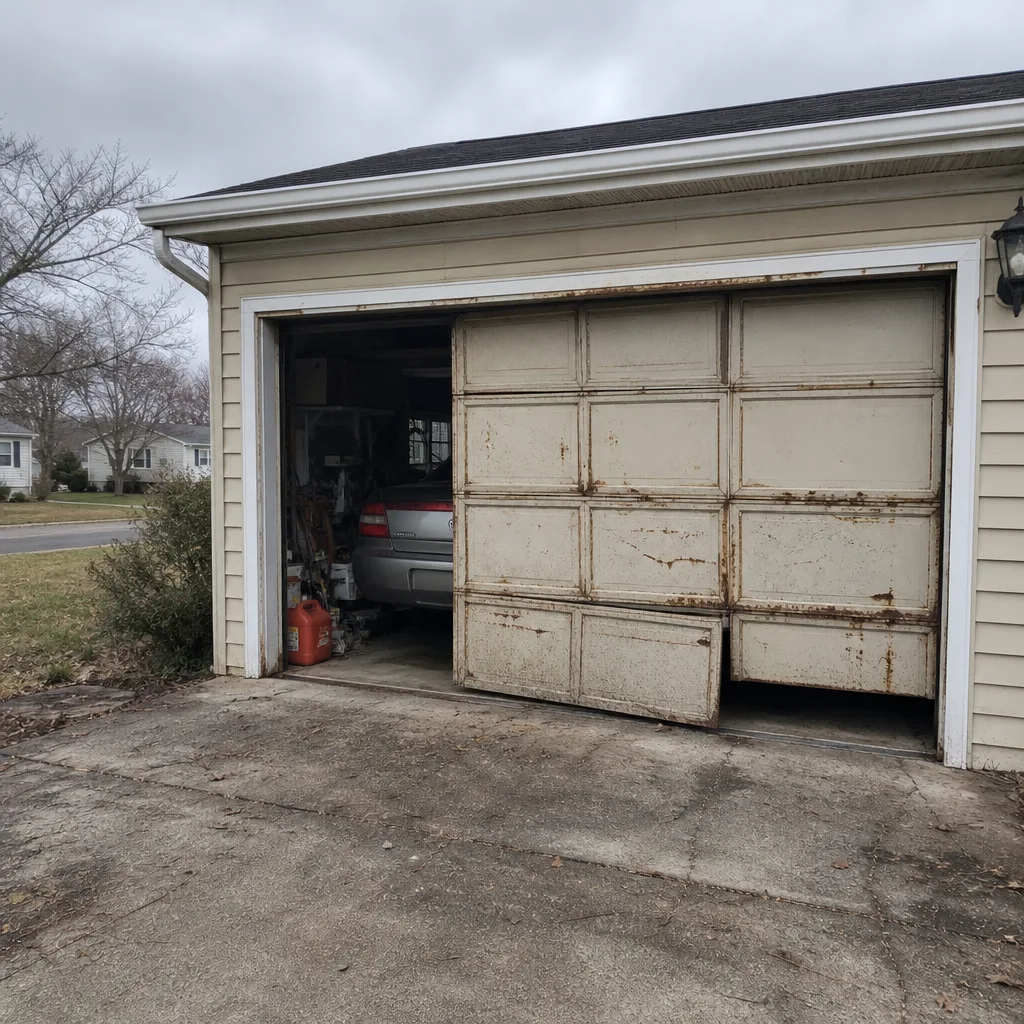 Before
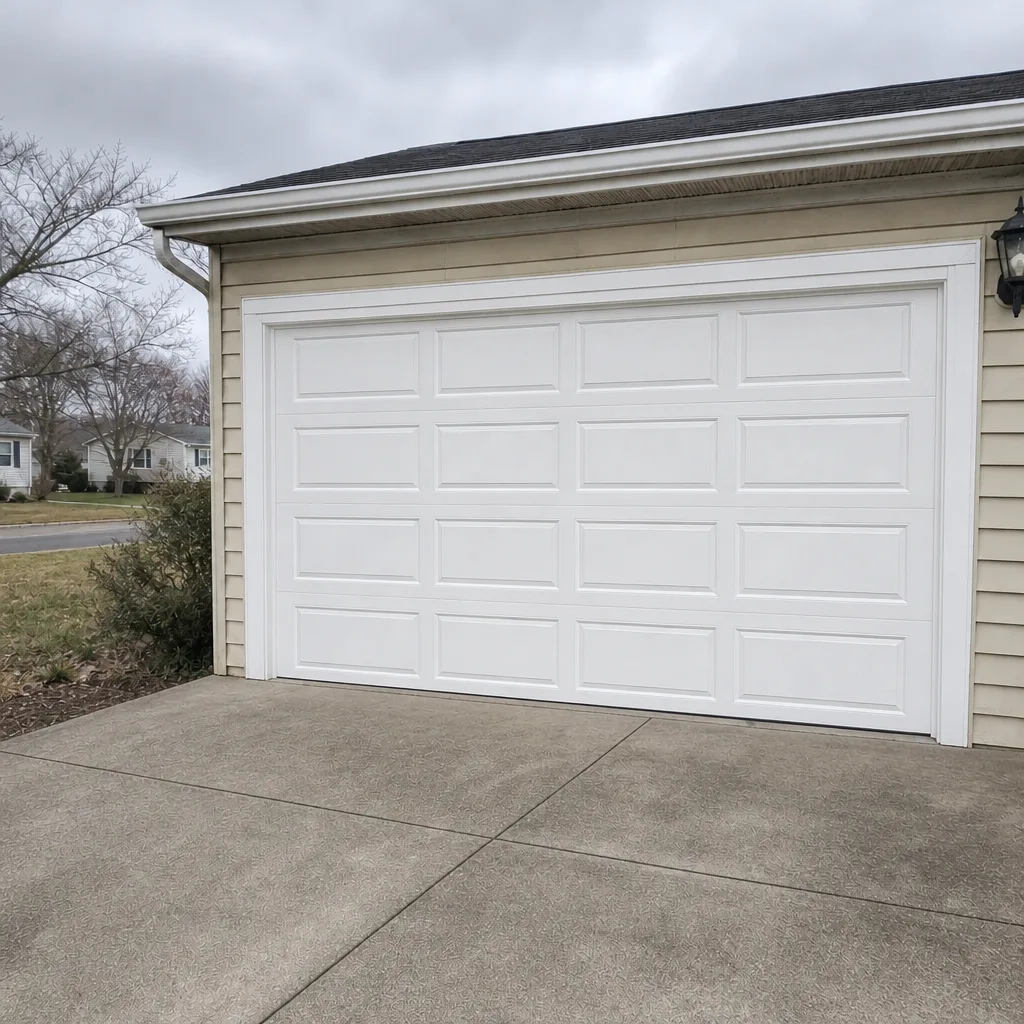 After
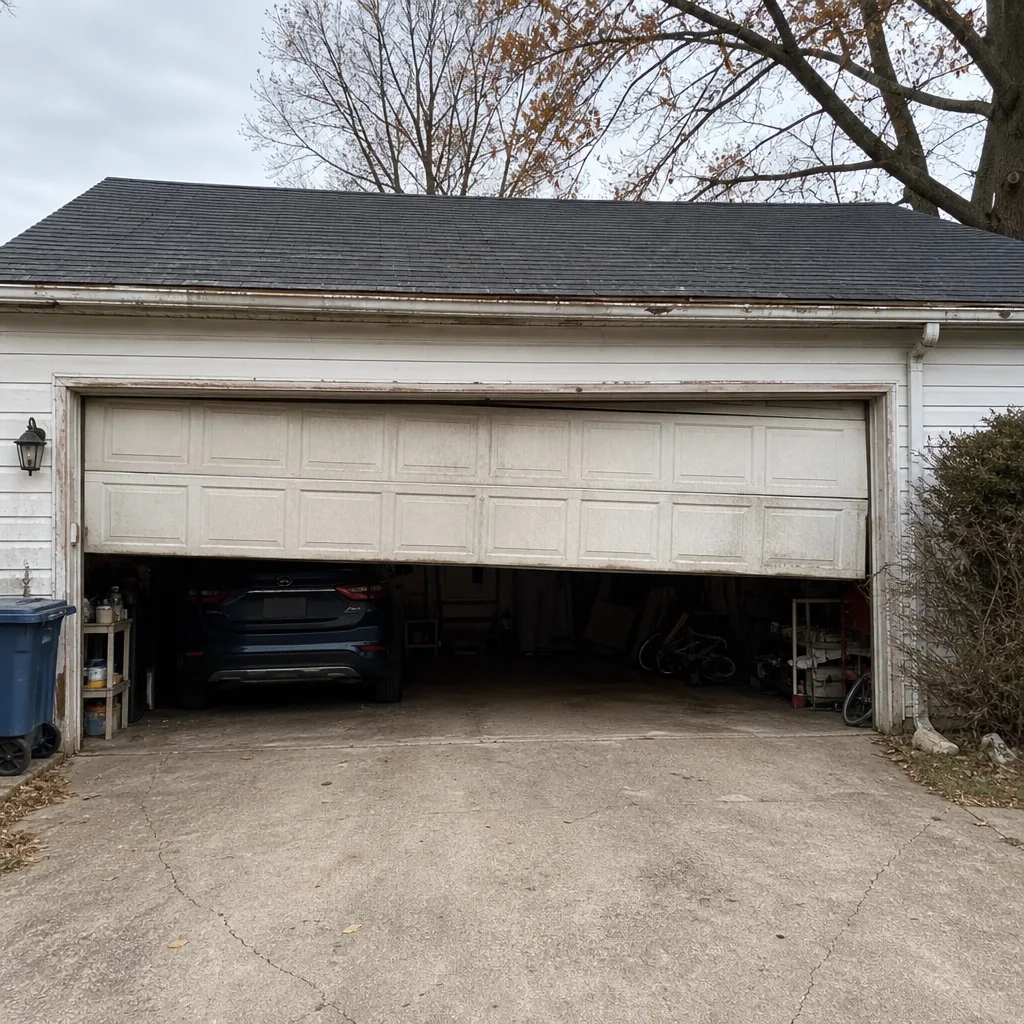 Before
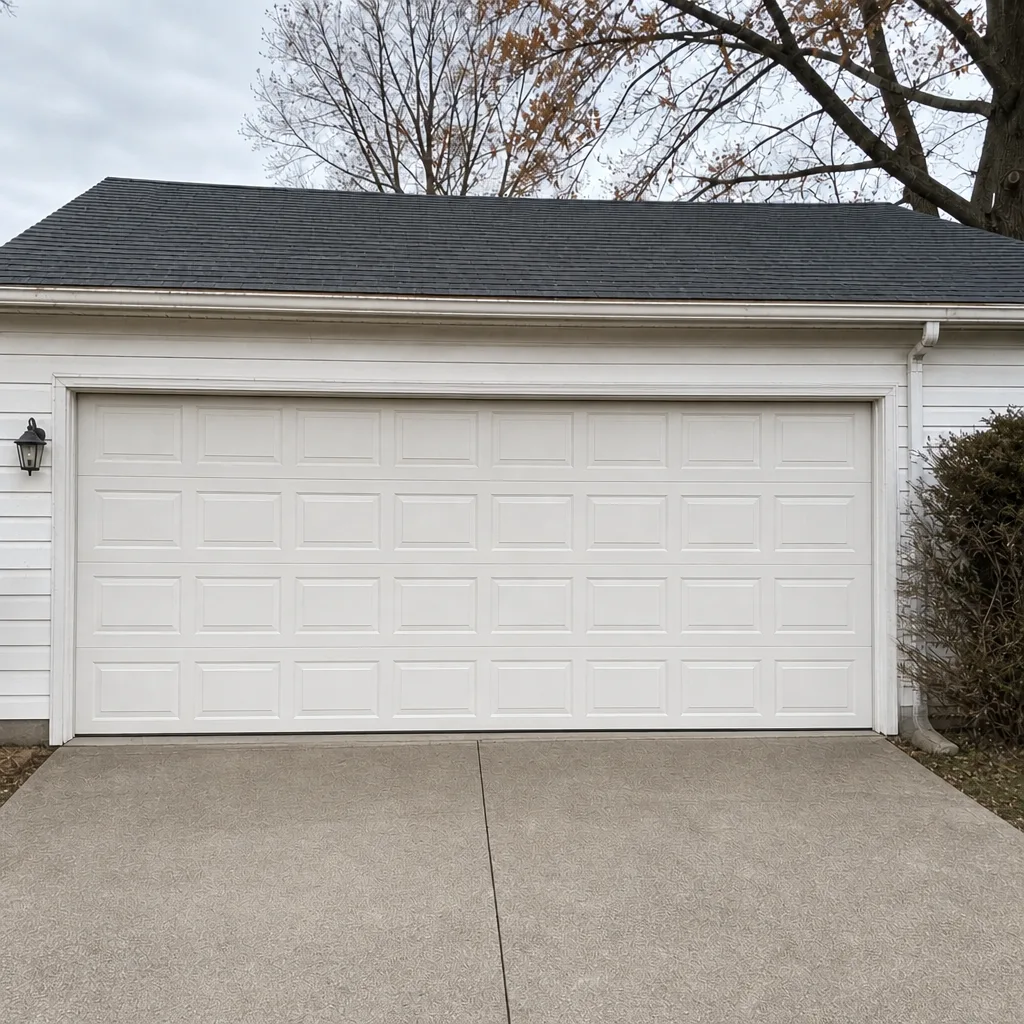 After
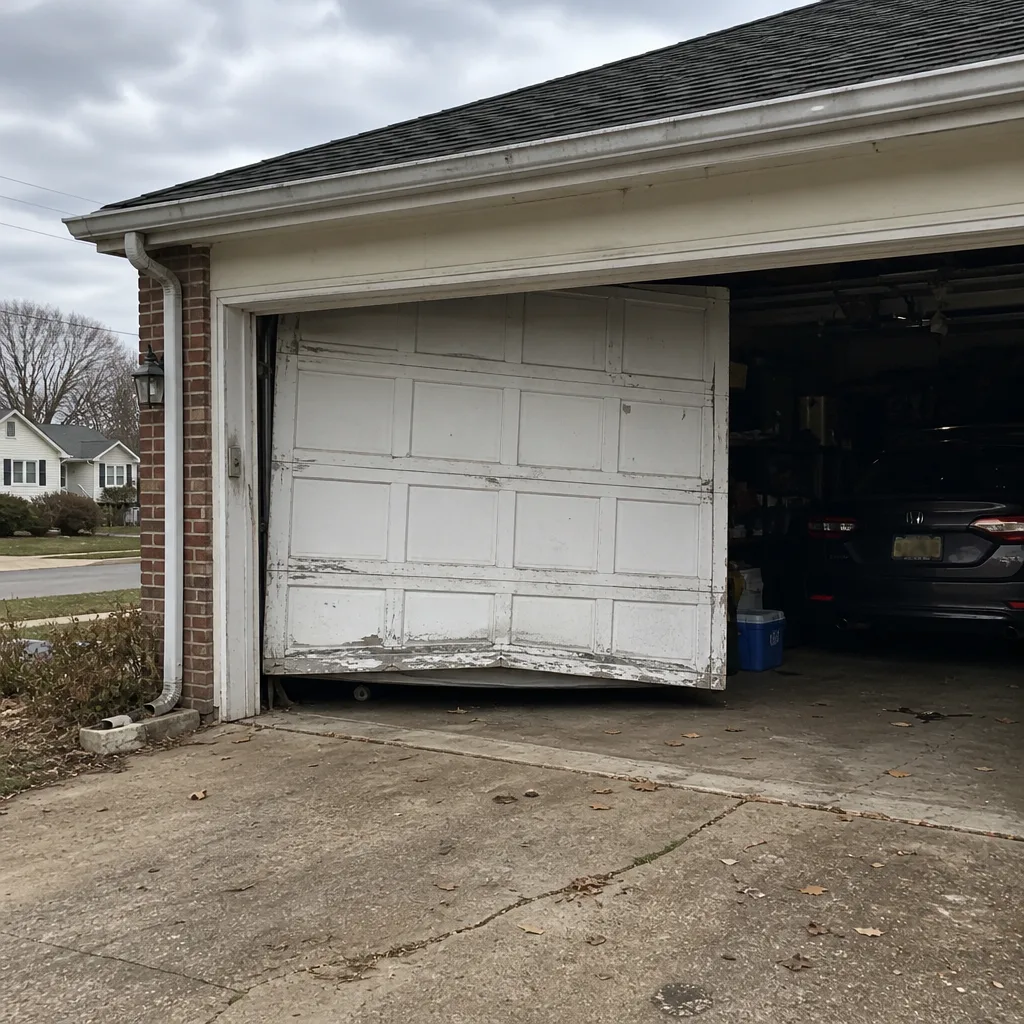 Before
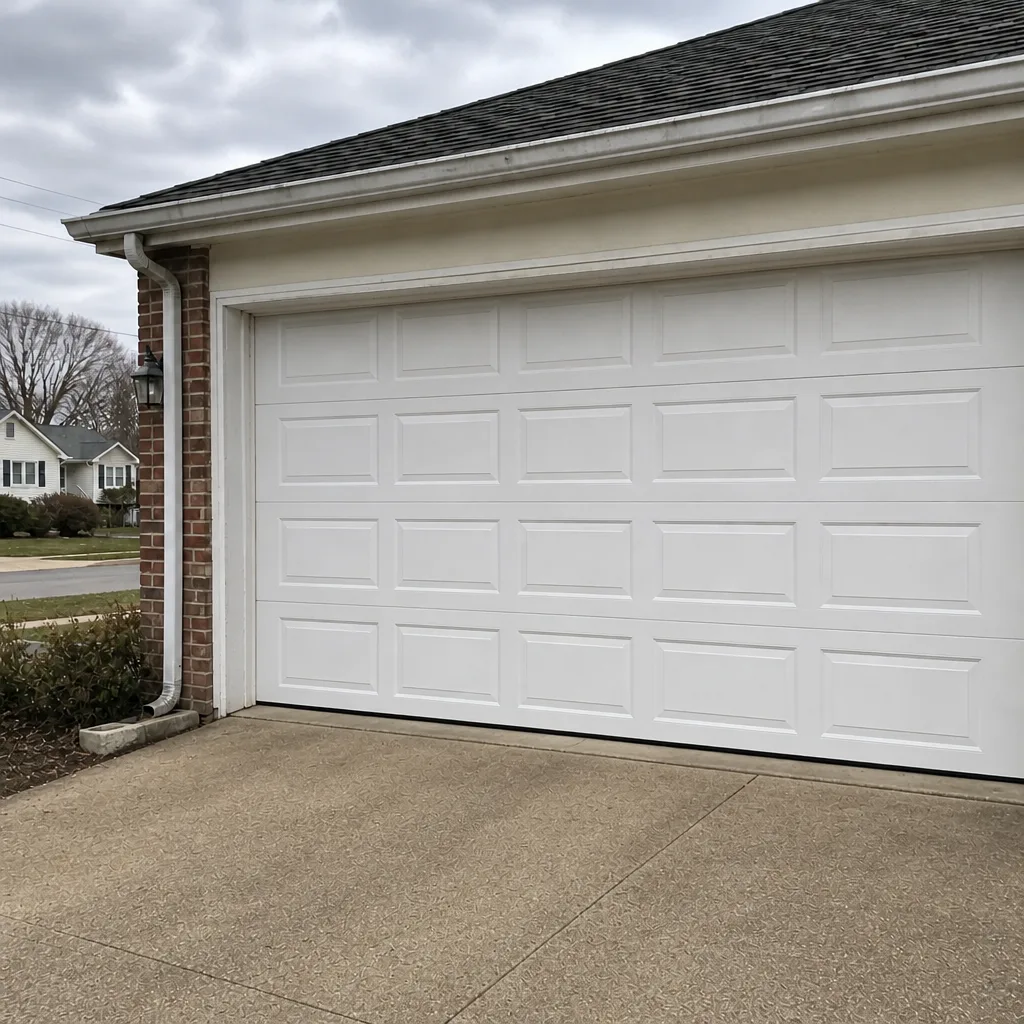 After
When to Call a Professional
Call for help if the door won’t close or won’t open at all, if you see a snapped or sagging spring, if the door is visibly off its tracks, or if it reverses on its own or feels like it’s about to fall. Call before using the door again if it’s your only entrance to the garage and the failure is a security risk. Any spring, cable or track work on the overhead system is genuinely dangerous and belongs to a trained professional. For a stuck or broken door, repair is same-day work and we treat a stuck door as a safety issue, not just an inconvenience.
Wilmington Garage Door Repair Co offers free estimates in Wilmington. Call (877) 780-7403. We answer 24/7. Fast dispatch from 7am to 7pm.
Frequently Asked Questions
Typical spring repair in Wilmington runs $180 to $340 for one spring, and a matched pair costs about twice that because the two springs wear together and are usually replaced at the same time. The written estimate sets the final price, agreed before any work starts, and estimates are free. Call (877) 780-7403 for an exact quote.
Yes, same-day repair is available for stuck and broken doors. We answer 24/7, and a call outside dispatch hours is booked into the next opening, Sunday through Friday, 7am to 7pm. Call (877) 780-7403 to get on the schedule.
There’s no single standard for a Wilmington rowhouse. Openings in older city blocks frequently run narrower and lower than modern sizes, so the door has to be measured to the actual opening. Keep your width, height and header clearance ready, and we’ll tell you what fits.
No, the written estimate is the price. You get the number before any work starts, and it’s agreed in writing, so there’s no larger invoice after the fact. If you want an exact figure, call (877) 780-7403 – estimates are free.
The local professional we connect you with is licensed and insured as their state requires. Our technicians have up to 8 years of experience, and they’re certified on 8 of the most common door and opener brands, from LiftMaster and Chamberlain to Genie, Clopay, Amarr, Wayne Dalton, Craftsman and Raynor. Call (877) 780-7403 for details.
Compare annual cost. Add your recent repair spending over the past two to three years, then divide a new door’s price by its expected service life. If your current door keeps costing more than the replacement’s annual cost, and it has rust or persistent track problems, replacement usually wins. Call (877) 780-7403 and we’ll give you a free written estimate for either path.
The Bottom Line
For most Wilmington homeowners, the right garage door decision comes down to measuring the opening properly, choosing steel thickness and finish that can handle a humid Delaware summer, and matching the opener to the ceiling and clearance you actually have. A rowhouse and a newer suburban build need different answers, and a national guide won’t tell you which you have. Repair is the right call when the door is sound and one component has failed. Replacement makes sense when rust, bent tracks or repeat repairs keep adding up. Either way, get the measurement first and the written price before any work starts. When you’re ready, call (877) 780-7403 for a free estimate. We answer 24/7. Fast dispatch from 7am to 7pm, Sunday through Friday.
Written by the team at Wilmington Garage Door Repair Co.