
Last updated November 21, 2026
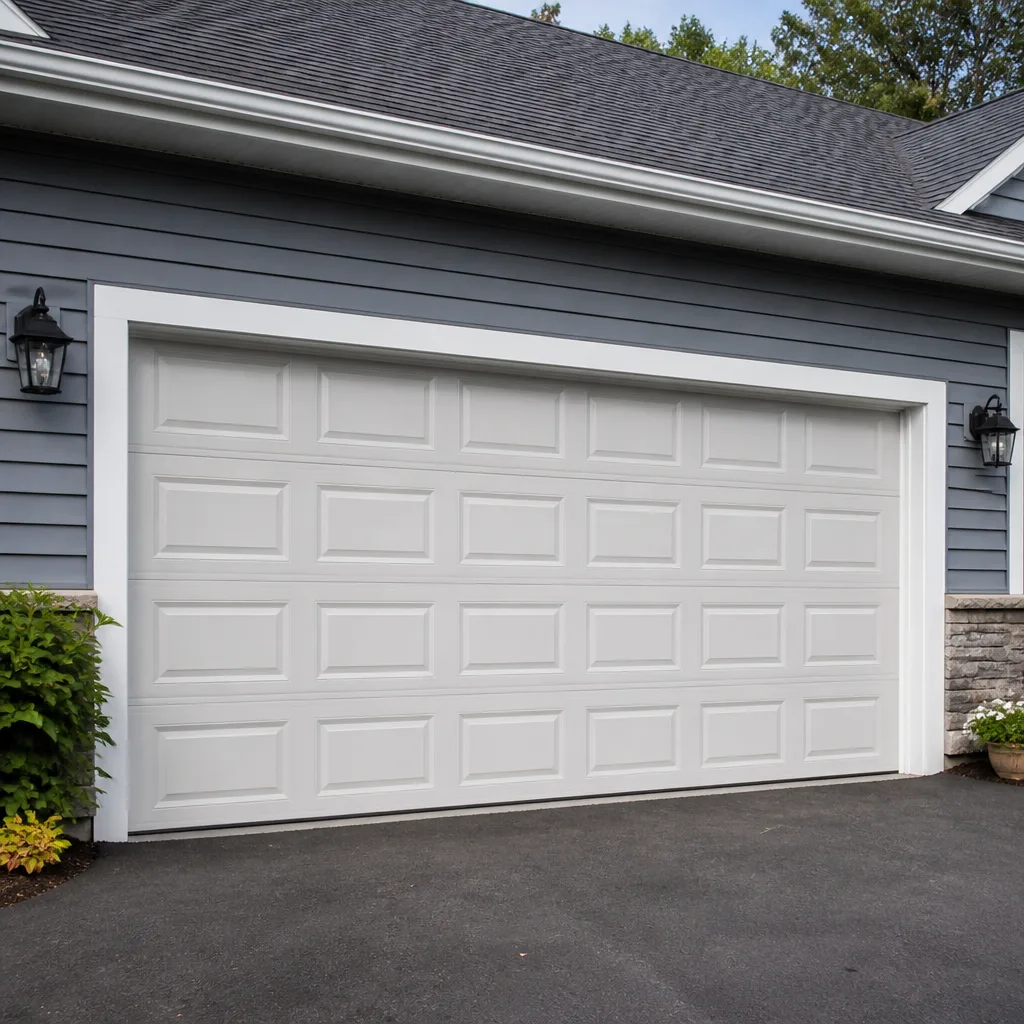 Raised-panel steel
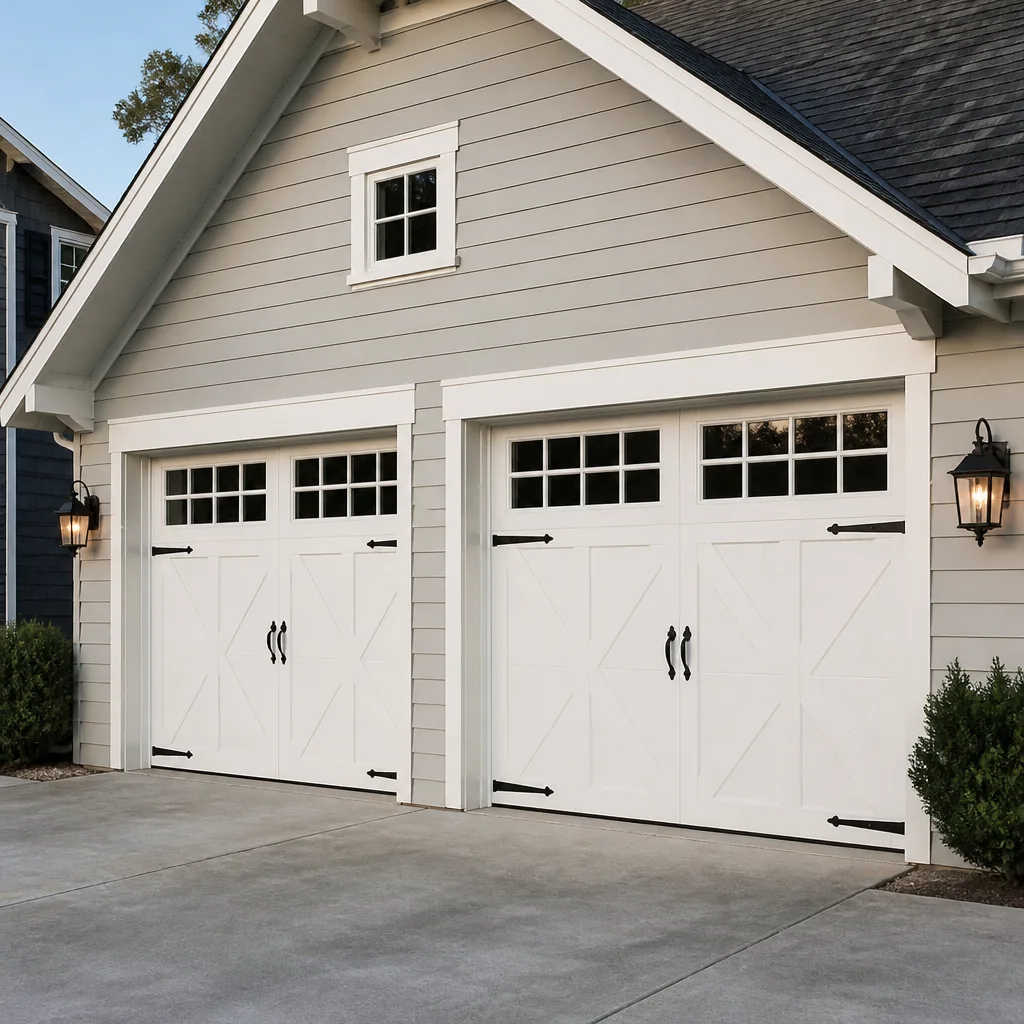 Carriage house
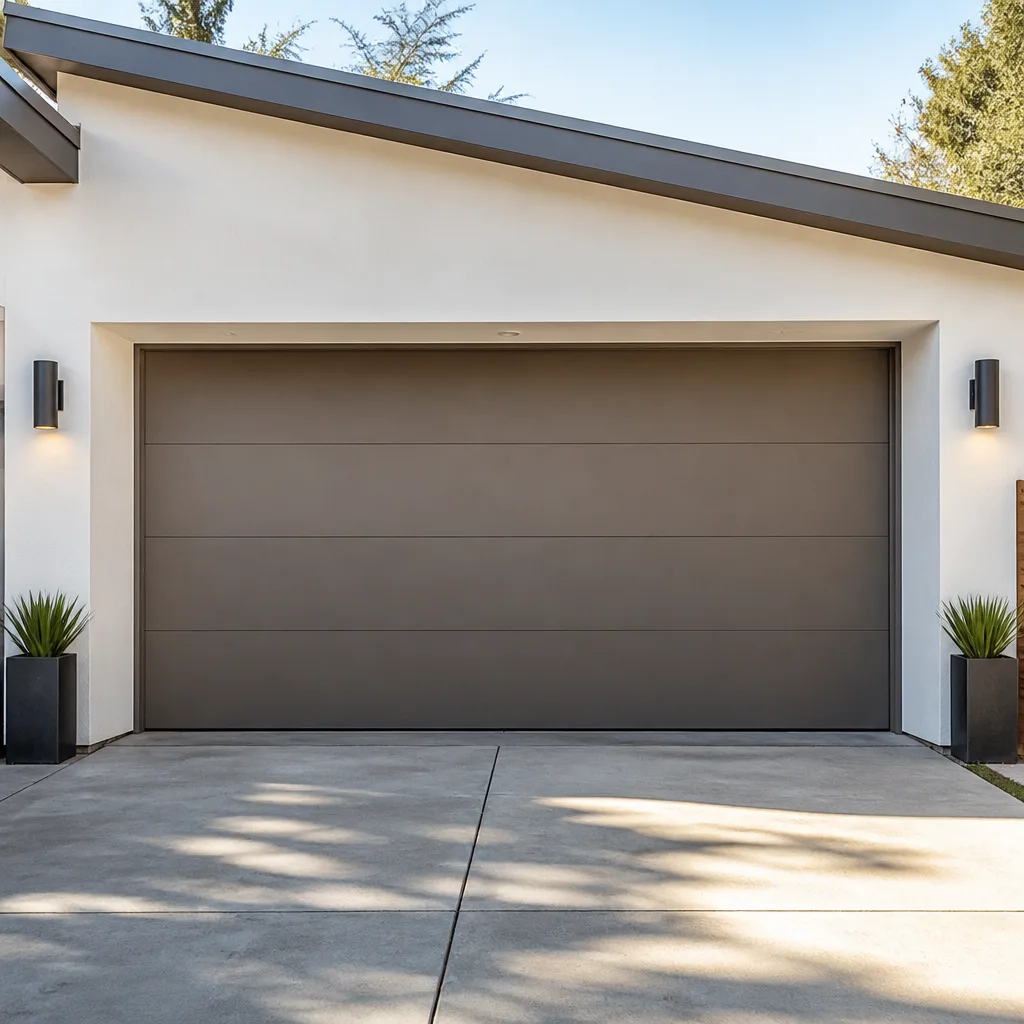 Modern flush
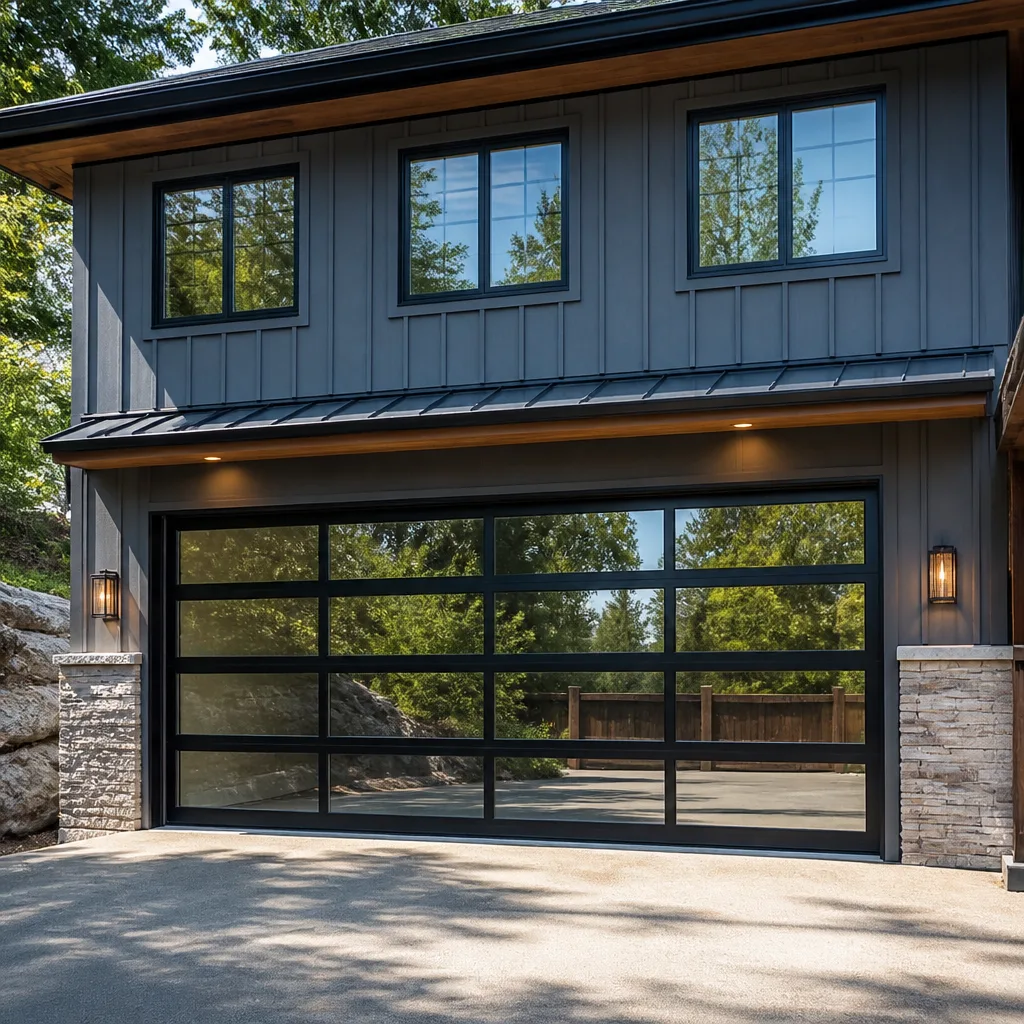 Full-view glass
 LiftMaster openers
 Chamberlain openers
Full 25-point door and opener safety check with every visit - springs, cables, rollers, tracks, and your LiftMaster or Chamberlain opener included
You get a price before we start. It does not change when the pro arrives.
Get your free estimateDIY vs Professional Garage Door: The Wilmington Homeowner’s Decision Guide
Most DIY-versus-pro arguments for home repairs center on skill. Can you handle it, or can’t you? That framing falls apart with garage doors. A torsion spring under tension holds enough stored energy that a sudden release can cause serious injury, and that physical reality changes the decision for one whole category of garage door work no matter how handy you are. You can be the most capable homeowner on your block in Wilmington and still be making the wrong call by touching a spring. This guide gives you a task-by-task answer about where the DIY line actually sits, what “saving money” really costs, and which situations mean you call a specialist.
Quick Answer
Genuinely safe DIY garage door work covers the visible, low-tension parts: cleaning and lubricating tracks and rollers, tightening loose hinges and bolts, replacing weather seals and bottom rubber, and reprogramming a remote or keypad. Anything involving torsion springs, cables, the high-tension side of the door, or the panel-and-track alignment that follows a spring failure belongs to a trained technician. The dividing line isn’t your confidence level. It’s whether the part you’re touching can unload a dangerous amount of stored force on you.
Styles & brands we work with
- Raised-panel steel
- Carriage house
- Modern flush
- Full-view glass
- LiftMaster openers
- Chamberlain openers
Table of Contents
- The Task-by-Task Breakdown: What’s Really DIY
- Why Torsion Springs Are Categorically Different
- What DIY “Savings” Actually Cost You
- How Delaware Homeowner’s Insurance Sees DIY Damage
- The Wilmington Context: Climate, Housing, and Your Door
- Brand Coverage and Why It Matters
- Scenarios Where You Should Always Call
- How to Decide in Under Five Minutes
The Task-by-Task Breakdown: What’s Really DIY
Garage door work splits cleanly along one line: does the task involve a component holding the full weight of the door under tension, or does it involve something you can see and reach without unloading that tension? Once you sort every job through that filter, the answer stops feeling arbitrary. Here’s the breakdown we walk Wilmington homeowners through.
Tasks that are genuinely DIY-appropriate:
- Visual inspection. Look over the door once a season. Check the rollers for flat spots, the hinges for cracks, and the springs for gaps or rust streaks.
- Lubrication. A garage-door-specific lubricant on the rollers, hinges, and the track curl keeps the door moving quietly. Don’t grease the tracks themselves.
- Tightening hardware. Loose hinge screws and roller brackets loosen over time. Finger-tight plus a quarter turn on a socket wrench handles most of them.
- Weather seals and bottom rubber. The bottom weather seal on a Wilmington door takes a beating from humidity and seasonal temperature swings. Replacing it is a straightforward job with a pull and push action.
- Remote and keypad programming. Rolling-code remotes from Chamberlain, Genie, and most major brands reprogram from the motor head without any mechanical work. The manual walks you through it.
- Cleaning the photo-eye lenses. If your door reverses on its own, the safety eye on one side of the track may just need a wipe.
Tasks that require a trained technician:
- Torsion spring replacement or adjustment of any kind
- Extension spring replacement
- Cable replacement or re-spooling on the drums
- Track alignment after an impact or spring failure
- Panel replacement
- Opener motor replacement or logic board swap
- Full door installation or removal
For any of that second list, garage door repair from a single-trade specialist is the right call. Our technicians have up to 8 years of experience on exactly these jobs.
Why Torsion Springs Are Categorically Different
A torsion spring is a big steel coil wound tight and held under tension, and that tension is what balances the dead weight of the door. When you pull the door up, the spring unwinds slightly and gives back the energy it stored. The system is essentially a counterbalance. The spring holds enough energy at full tension that when it fails, that energy releases in an instant, and the failure can happen to an untrained person just as easily as a trained one.
This is why the DIY comparison to other repairs doesn’t hold. Swapping a light switch or patching drywall fails safe: the worst case is usually a broken fixture and a lesson learned. A torsion spring fails hard. The winding bars, the winding sequence, the counter-tension procedure, and the way you release tension before you touch anything are all skills learned through training and repetition on the mechanism under controlled conditions. There’s also a wrench-and-bar dynamic most homeowners have never seen: two bars go in the winding cones, and the bars have to alternate in a specific rotation so tension never releases onto your hand.
Nobody reputable in Wilmington should get instructions for walking you through a torsion spring swap. What we will do is explain the mechanics in plain terms, tell you the visible signs of a spring that’s near the end of its life, and take the job off your hands. If you ever see a gap in the spring coil, hear a loud bang from the garage, or find the door sitting heavy and unmoving, the spring has likely failed. Call a technician.
A door with a broken spring is also dead weight on the opener. Running a garage door opener repair on a system that’s fighting a failed spring burns the opener out and costs more than fixing the spring in the first place. If the door won’t lift at all, the opener is usually the symptom and the spring is the cause.
What DIY “Savings” Actually Cost You
Here’s where the money math tilts. Most homeowners price a DIY job as materials only. A professional job gets compared against the retail cost of a part, and on paper the DIY option looks cheaper. That comparison skips the tool costs, the markup at the box store, and the callback risk if the job doesn’t hold.
What the DIY calculation usually misses:
- Tool rental or purchase. Winding bars, proper sockets, and a calibrated calibration pad aren’t in most garages. You either buy them or rent them, and on a one-time job the purchase price or rental price lands squarely on you.
- Retail parts markup. A torsion spring bought at retail over the counter costs more than a technician pays for the same component. That retail gap can eat a third of the DIY savings before you touch a bar.
- Callback risk. A spring that’s wound wrong, a cable that’s spooled incorrectly, or a door that hasn’t been re-leveled can fail within weeks. The retail cost of a second spring plus tools on a second attempt usually erases the whole savings.
- The unknown second problem. Most spring failures take a roller or a hinge with them. A homeowner working solo without a trained eye usually misses it until the door is riding rough two months later.
- Your time. Not in dollars, but the weekend you spend studying the mechanism and then waiting for a helper is real.
Garage door work is also the one category on the house where a price gets quoted and agreed before anyone starts. Most professional repairs in Wilmington will be quoted at a fixed price for the job, so you know the full cost before the technician picks up a tool. If you want a number in hand, the estimate is free.
How Delaware Homeowner’s Insurance Sees DIY Damage
Homeowner’s policies generally cover sudden accidental damage from a covered event, not poor workmanship. A spring that fails in normal use is usually a covered breakage subject to your deductible. A spring a homeowner installed improperly and that fails on the way down is a different question: most policies exclude faulty workmanship, and a claim examiner will ask who did the installation. When the installer was you, the adjustment can come back as a denial.
There’s a second layer, which is the door itself. If an incorrectly adjusted torsion setup lets the door drop onto a car or a person, the question of who did the installation and whether it was done to spec is the same question the claim examiner asks. Garage door adjusters and home inspectors in Delaware look at the mechanical system when a door gets damaged. A homeowner-installed spring leaves no work record, no invoice, and nothing to stand behind. The installed-by-a-technician version usually does. That’s not a pitch for a policy; it’s a reason we tell Wilmington customers to have any tricky adjustment done by someone who leaves a written record of the job.
None of this means DIY weather seals and lubrication are a claims problem. It’s specifically the load-bearing, high-tension components. Keep your small fixes small and your spring work documented.
The Wilmington Context: Climate, Housing, and Your Door
A door in Wilmington faces a specific cocktail of conditions that doesn’t apply to a door in a dry climate or one installed two years ago. The Mid-Atlantic humidity means the bottom weather seal traps moisture against the door panel, so the seal should be checked more often than the maintenance calendar suggests. The seasonal swing between a humid summer and a cold winter cycles the door’s metal a couple of times a year. That thermal expansion and contraction is a real reason hinges loosen and springs weaken.
Wilmington’s housing stock matters too. The city has a lot of homes with older garage doors that date back decades, and many of those are on wood-jamb frames. A door that’s sat in a wood-jamb frame for a long time can have a track that’s out of level even when the door itself is fine. We see this all over the city, from the older streets of the Highlands to the newer construction out toward Pike Creek and Hockessin. The door aged into its track, so simply replacing a spring on the same frame may not be enough. The track needs to be checked too.
We also hear a specific sound on older Wilmington doors in the cold months, a moan or groan that no amount of lubricant fixes. That’s usually metal-on-metal wear at a roller or hinge that’s worn through its protective coating, and it’s an easy fix that becomes a bigger job if ignored. Our technicians have up to 8 years of experience on this exact issue and on the older mechanisms that come with a property the age of Wilmington’s.
Brand Coverage and Why It Matters
Brand coverage is the quiet trap in the DIY-versus-pro decision. If your door is a Clopay and the technician only works on Amarr, your home visit goes nowhere. If the opener is a Chamberlain and the person on the phone only carries Genie parts, you’re back to square one. We handle all 8 of the major brands a Wilmington homeowner is likely to own: LiftMaster, Chamberlain, Genie, Clopay, Amarr, Wayne Dalton, Craftsman, and Raynor.
That matters more for DIY decisions than it sounds. When you buy a DIY part for a specific door, brand and model usually dictate the specs: spring wire gauge, drum diameter, panel dimensions, and roller type all depend on the door’s original spec. A homeowner ordering the “right” size online based on a model number can end up with a part that fits the model but not the door. The technician handles it because they’ve measured a lot of these doors and can identify the exact setup in front of them.
Our own capability is built around this. Spring repair is a named specialty of ours, and it’s the category where brand fit matters most. If you call us and the door is a brand we work on (and it probably is), you won’t get a “we don’t service that” dead end. The same crew handles the diagnosis and the fix.
Scenarios Where You Should Always Call
Some situations call for a pro regardless of your confidence or your toolbox. These are the ones where the injury risk or the structural stakes make the DIY math not worth it in Wilmington:
- A spring has broken. You heard a bang from the garage and the door won’t lift. That’s a spring failure, and it’s the category to hand off without hesitation.
- The door is off its track. A door that has scraped sideways out of the track has a bent panel or a bent track. Both are load-bearing and both need a technician to correct the alignment.
- Cables are frayed or loose. A slack cable means the counterbalance is compromised on one side. It needs the tension released safely before anything gets touched.
- The door falls fast or reverses unexpectedly. Every one of those is a safety issue and not a DIY weather-seal moment.
- You’re replacing the door itself. Full installation is a measurement and ordering job as much as a mechanical one. A door ordered to the wrong dimension can’t be made to fit.
- Your door is on a wood-jamb frame showing rot. That’s the structural mount the whole door hangs on. It needs to be evaluated as a system before any component gets replaced.
- The opener is failing on a heavy door. The motor may be the symptom, not the cause. A technician will diagnose which one it is.
Emergency garage door service exists for exactly these situations, where a stuck door is a safety and security issue, not an inconvenience. Call (877) 780-7403. We answer 24/7. Fast dispatch from 7am to 7pm, Sunday through Friday.
How to Decide in Under Five Minutes
The easy way to make this call is a short decision path. It works on any garage door in Wilmington and doesn’t require you to know the difference between a torsion and an extension spring.
- Does anything move the door? If the answer involves a spring, a cable, a motor, or a track, the job is a technician’s. If it’s a seal, a hinge, or a screw, it’s probably yours.
- Is your door on the load of the spring right now? A door you can lift by hand without much effort at rest has a spring doing its job. A door that falls heavily has a system that’s compromised. That’s the danger signal.
- Do you have the job recorded? If the last adjustment on this door was done by a professional and has a written record, fixing the next issue is simpler. If the last adjustment was you, there’s no record and no recourse.
- Does the job involve a component you can’t see the far side of? Springs, cables, and drums have part of their mechanism hidden inside the coil or the drum. That’s the trained-eye category.
- Would a failed job hurt someone? If yes, the DIY option isn’t worth pricing.
If you’re reading this and the answer still feels uncertain, the safest move is to call. The estimate is free and the price is quoted before anything gets started.
Common Mistakes to Avoid
- Buying a spring by model number without measuring. Doors are matched to springs by door weight and height, not the label on the old spring. A mismatched replacement adds tension the opener can’t handle.
- Pulling the manual release on a dead door and letting it drop. If the spring is broken, the door has no counterweight. Pulling the release lets the door come down fast. Leave it alone and call.
- Tightening a track back into place by hand while the door is up. The track is load-bearing. Any adjustment should happen with the door down and the tension removed by a technician.
- Skipping the seasonal inspection because the door works. Wilmington’s humidity quietly rots the bottom seal and jamb frame while the door still runs. Ten minutes of checking prevents the bigger repair.
- Treating a repetitive reverse as an opener fault. A door that reverses on the way down is usually an obstruction in the path or a misaligned photo-eye, not a dead motor. Diagnose before ordering a new opener.
- Doing a full install without verifying the jamb and header. A door hung on a rotted wood-jamb frame will eventually pull the track loose. The mount gets checked before the new door goes on.
- Ignoring a rough-running door in cold weather. The groan on a cold Wilmington morning is usually a worn roller or a dry hinge. It turns into a track problem if it’s left too long.
See the difference
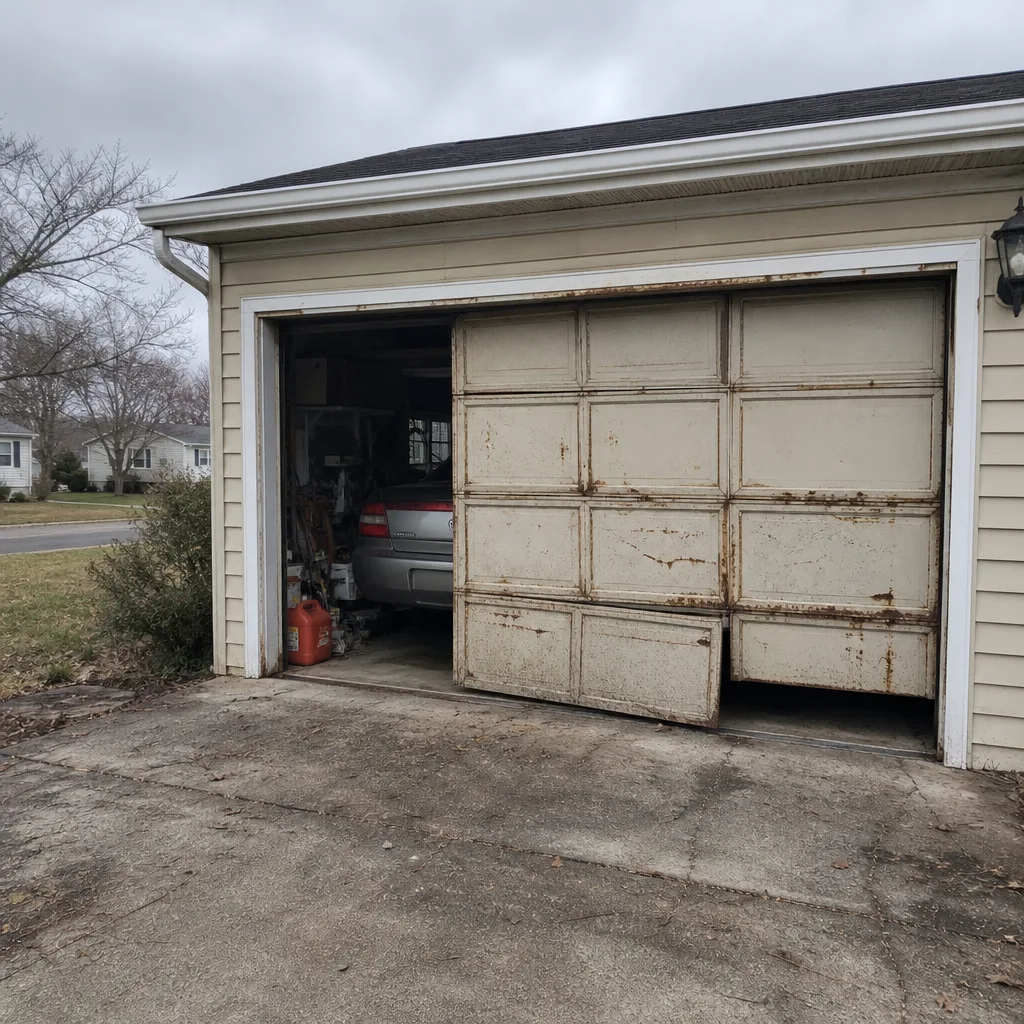 Before
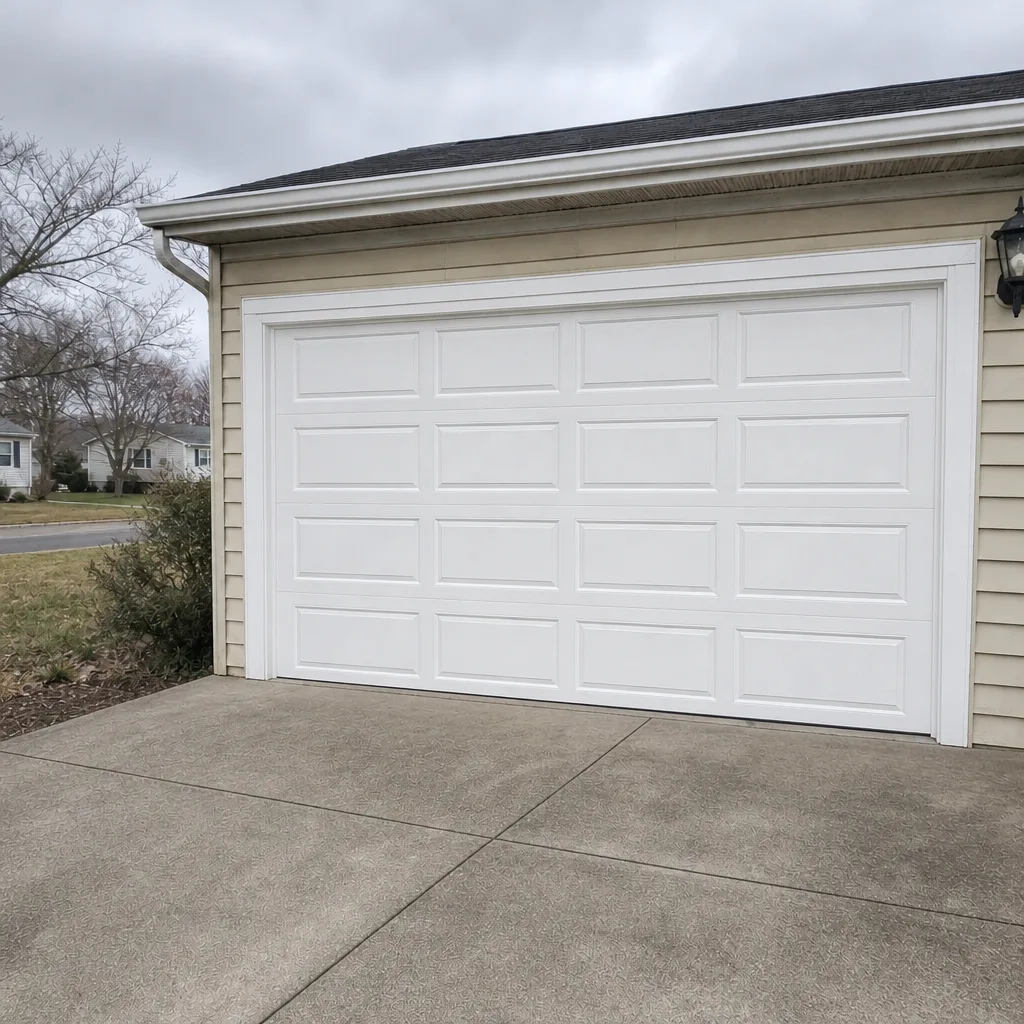 After
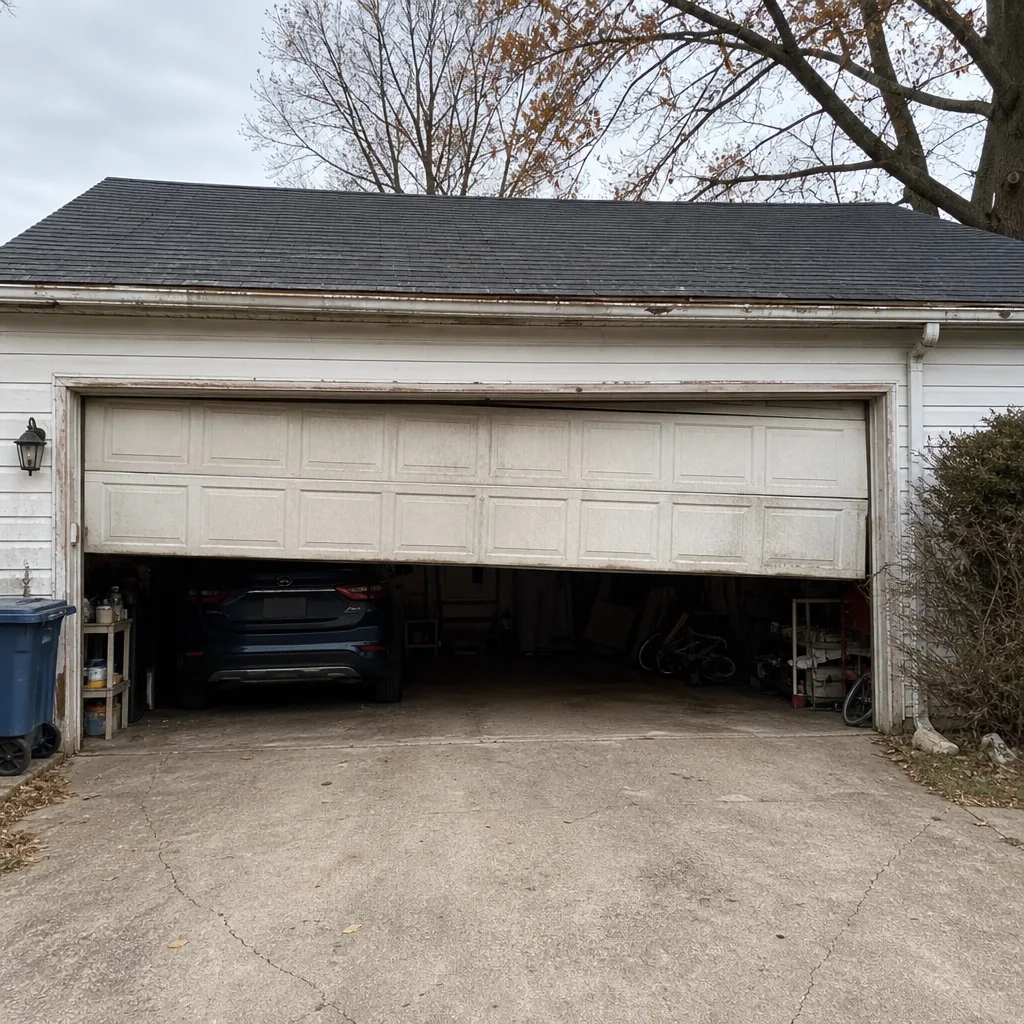 Before
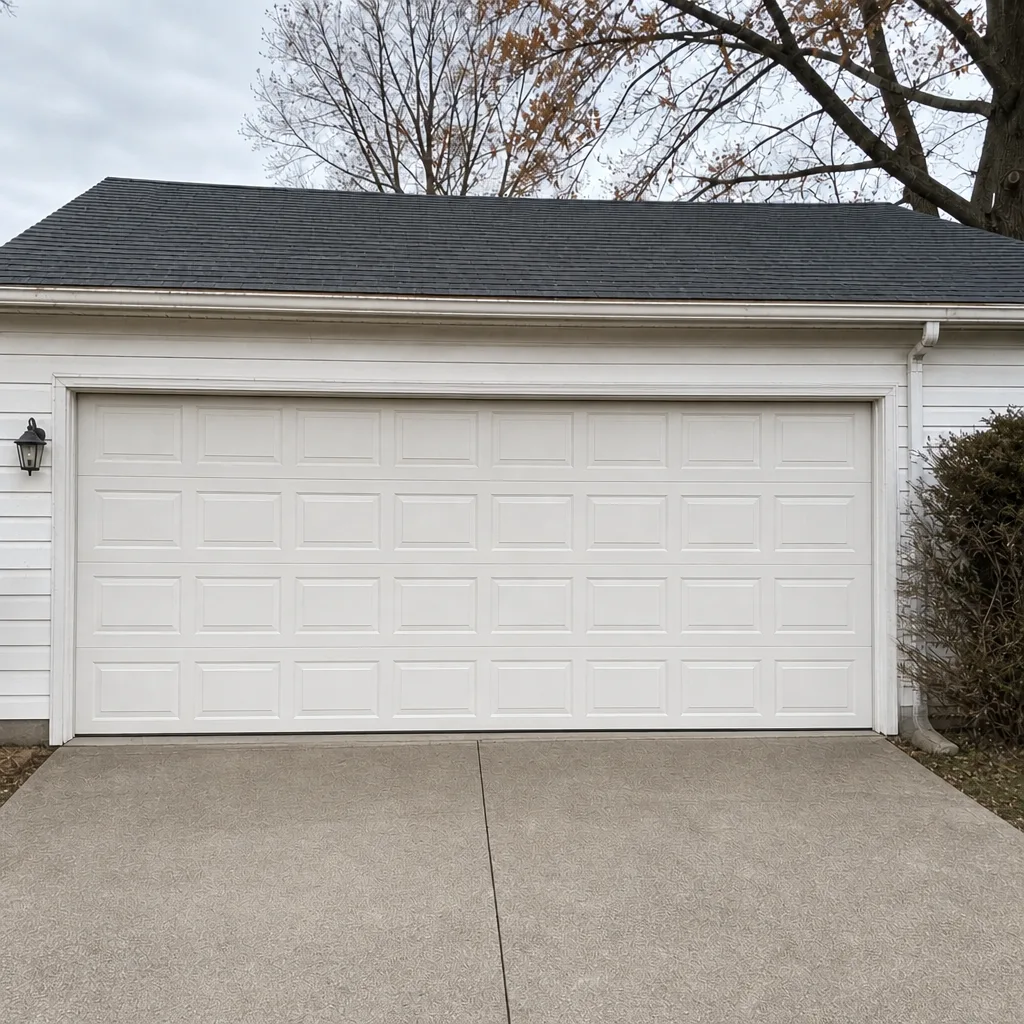 After
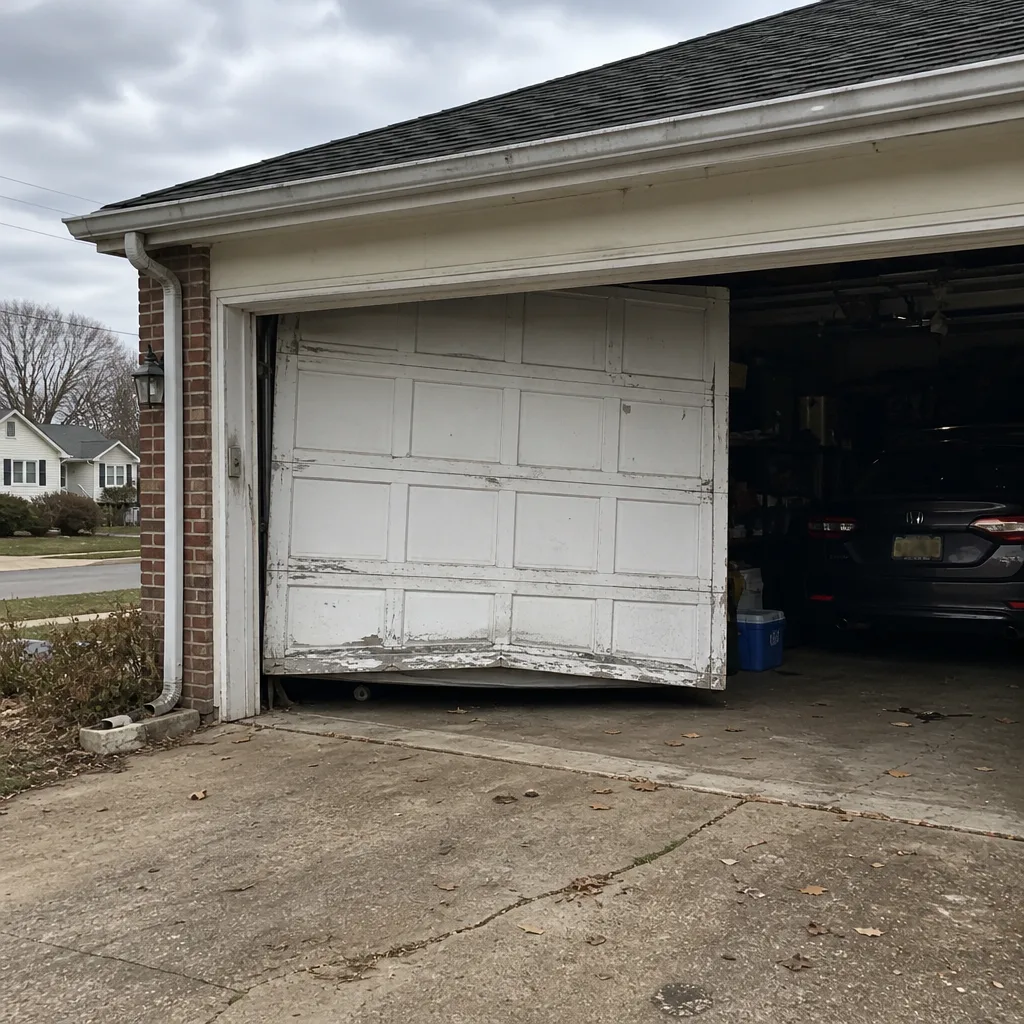 Before
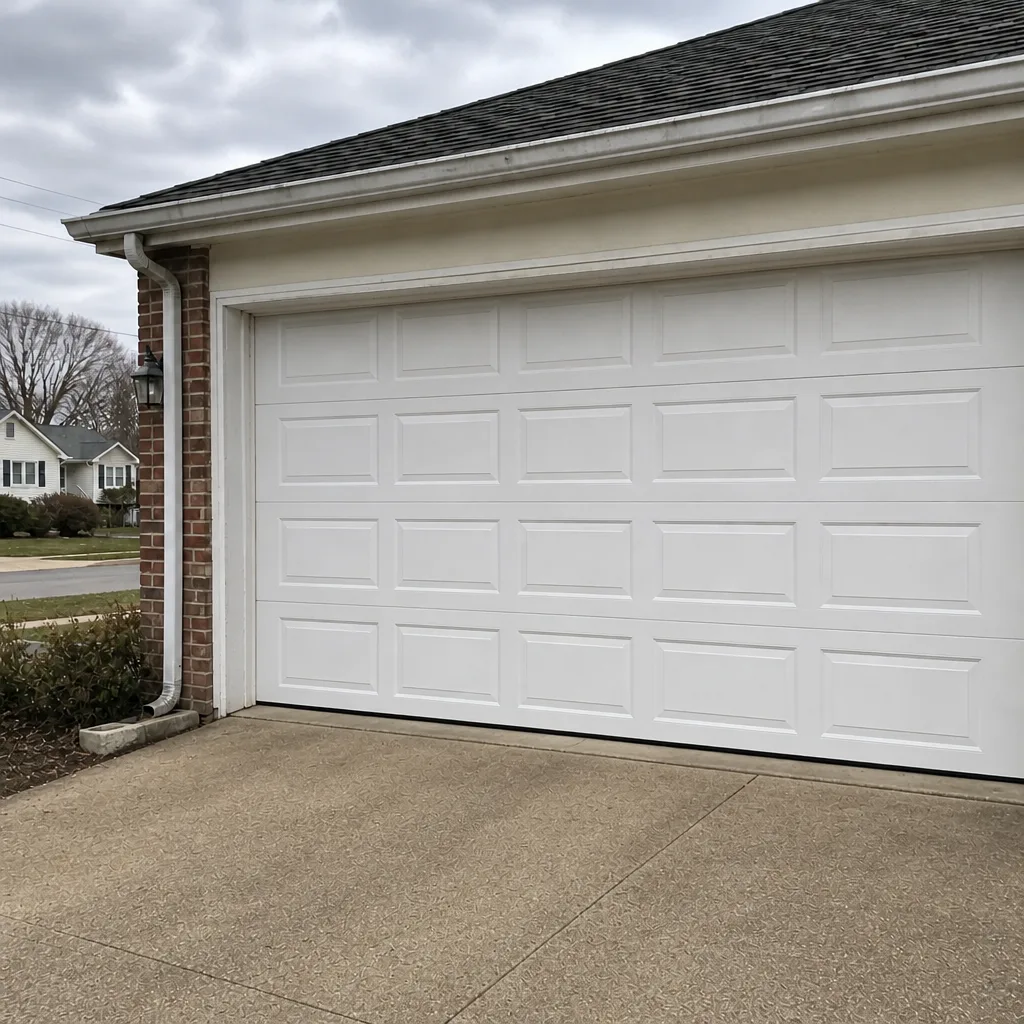 After
When to Call a Professional
Call a professional the moment the work involves a spring, a cable, a track, or a panel. Also call when you’re not sure what’s wrong. A short diagnosis from someone who works on these systems daily is faster than a weekend of studying, and it keeps you out of the danger zone. Emergency service exists for stuck doors that compromise your home’s security, and a same-day slot is usually possible for a broken spring or a door that won’t close.
Wilmington Garage Door Repair Co offers free estimates in Wilmington. Call (877) 780-7403. We answer 24/7. Fast dispatch from 7am to 7pm, Sunday through Friday. If you’re still weighing options, read more about garage door spring repair and the full range of what we handle at Wilmington Garage Door Repair Co. The written estimate sets the price, and the job doesn’t start until you agree to it.
Frequently Asked Questions
No. A torsion spring holds a dangerous amount of stored energy, and the winding and release procedure requires training and the right tools. Even experienced homeowners should not attempt it. Call a technician.
Yes for springs, cables, tracks, panels, openers, and installs. The DIY math only wins on seals, lubrication, hardware tightening, and remote programming. On everything else the risk of injury and callback cost tips the scale toward a pro.
Prices depend on the exact part, the door, and access. The written estimate sets the price for the job, and the estimate itself is free. Call (877) 780-7403 for an exact quote on your door.
Usually not. Most policies exclude damage from faulty workmanship and cover sudden accidental damage from covered events. The claim examiner will ask who did the installation, and a homeowner-installed part often leads to a denial.
Often, yes. Same-day service is standard for broken springs and doors that won’t close. Call (877) 780-7403. We answer 24/7. Fast dispatch from 7am to 7pm, Sunday through Friday.
We work on LiftMaster, Chamberlain, Genie, Clopay, Amarr, Wayne Dalton, Craftsman, and Raynor. Those are the eight major brands most Wilmington homes have. You won’t get a “we don’t service that” answer on a brand we cover.
The Bottom Line
The DIY-versus-pro question for garage doors comes down to which tasks can hurt you, not how capable you are. Lubrication, seals, hardware tightening, and remote programming are fair game and worth doing yourself. Springs, cables, tracks, panels, and installs are not, and the cost of a DIY mistake on those parts runs from a callback repair to a claim denial to an injury. Wilmington’s humidity and older housing stock add their own reasons to keep an eye on the door and to have the hard jobs done by a technician who leaves a written record. If your door is in the first category, you’re set. If it’s in the second, get a free estimate and a written price before anyone starts. Call (877) 780-7403. We answer 24/7. Fast dispatch from 7am to 7pm, Sunday through Friday.
Written by the team at Wilmington Garage Door Repair Co.